Ancestors, Dances, Gridlock
Quick Summary
Obon is Japan's Buddhist festival for honouring ancestors, observed nationally from 13 to 16 August (mid-July in Tokyo). Families return to hometowns, graves are cleaned, and bon odori dances fill parks nationwide. For travellers, it also marks the busiest stretch of the year for trains, flights, and roads.

Date |
13-16 August 2026 |
Location |
Nationwide (Tokyo/Yokohama: mid-July; Okinawa: late August) |
Type of News |
Japan Travel Trend / Cultural Event |
Audience Affected |
Tourists, families, domestic travellers |
Official Source |
Main Story
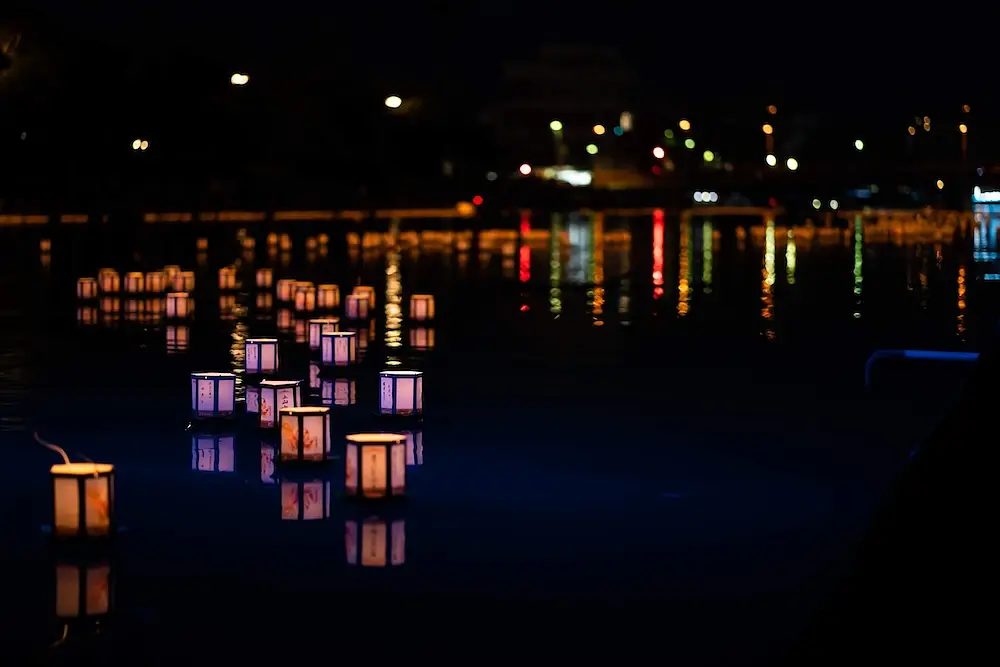
Obon honours ancestors, whose spirits are believed to return home for a few days each summer. On 13 August, households light mukaebi welcome fires and visit family graves (ohakamairi). Many also display shoryo-uma, cucumber-and-aubergine animal figures meant to carry spirits swiftly in and slowly out. It closes on 16 August with okuribi send-off fires and, in some regions, toro nagashi, floating paper lanterns downriver to guide spirits home.
Beyond household rituals, several city-wide festivals, plus an overlapping run of summer fireworks displays, make Obon one of the best weeks to visit.

Kyoto's Gozan No Okuribi (Daimonji Bonfires)
At 8 pm on 16 August, five giant bonfires, including the famous "dai" character, are lit across the mountains ringing Kyoto, while lanterns drift down the Oi River at Arashiyama's toro nagashi nearby. Popular free viewing spots include the banks of the Kamo River, though these fill up well before 8 pm (exact spots to be confirmed). Book a Kyoto base early, as rooms sell out fast that week.
Awa Odori In Tokushima
Japan's largest bon dance runs 11-15 August 2026, with street dancing on 12-15 August. Around a million spectators watch roughly 100,000 dancers, with venues a 5–15 minute walk from JR Tokushima Station; free street viewing sits alongside paid stage seats from about ¥2,000-¥15,000. Details are on the official Awa Odori site.

Gujo Odori's All-Night Dancing
In the Gifu town of Gujo Hachiman, a 10–15 minute walk from Gujo-Hachiman Station, dancing runs 30 nights from mid-July to early September, but the four Obon nights (13-16 August) become Tetsuya Odori, an all-night dance from 8 pm to around dawn. It is free, UNESCO-listed, and built for visitors to join. See the official Gujo Odori festival page for schedules.
Local Bon Odori Everywhere Else
Most neighbourhoods run their own smaller bon odori around a central yagura tower, usually free and welcoming to visitors. Dates and locations vary by district and are typically posted on local ward or city tourism sites closer to mid-August. Expect food stalls, taiko drumming, and a mix of locals and visitors dancing in loose circles around the tower. Pair one with festival-stall snacks; our guide to Japanese street food covers what to look for.

Why Obon Matters For Travellers
Obon isn't an official holiday, but most of Japan stops anyway, making this the year's busiest travel week. Mountain Day on 11 August 2026 extends many people's leave to nine days off. JR Central reports nearly a third of 4.8 million reservable Shinkansen seats were booked weeks ahead, with unreserved seating suspended on Tokaido and Sanyo Nozomi trains.
Outbound travel peaks around 8 and 11-13 August, with the return rush on 15-16 August; see JR Central's Obon crowding forecast for details. A Japan Rail Pass still reserves seats at no extra cost, so book the moment reservations open.

What Comes Next
Here's what to sort out before you travel:
Book hotels 2-4 months out, especially in Kyoto, Tokushima, or Gifu, where rooms sell out fastest.
Reserve Shinkansen seats the moment sales open, since unreserved seating is suspended on key Nozomi services.
Travel against the flow where possible, since off-peak days and reverse-direction trains tend to be quieter and cheaper.
Base yourself in one city for the core 13-15 August days to avoid the worst congestion.
Book Kyoto hotels for Obon season near the main bonfire viewing spots, and consider a pocket wifi rental or airport Meet and Greet service to ease the arrival rush.
Obon is expected to fall on the same dates, 13-16 August, in 2027, so this advice carries over each year. Confirm the official calendar closer to the date.
FAQs
Below are the questions travellers ask most often about visiting Japan during Obon:
Q: What is Obon in Japan?
A: Obon is a Buddhist summer festival when families honour deceased ancestors through grave visits, home altars, and community dances.
Q: When is Obon 2026?
A: Most of Japan observes Obon from 13 to 16 August 2026, though Tokyo celebrates in mid-July instead.
Q: Is Obon a public holiday in Japan?
A: Obon is not an official public holiday, but most companies grant leave, so it functions like one nationwide.
Q: How long does Obon travel congestion last?
A: Congestion typically runs from around 8 August through 16 August, covering both the outbound and return travel waves.
Q: Can tourists join Bon Odori dancing?
A: Yes, most bon odori circles, including Awa Odori and Gujo Odori, welcome visitors to join without any prior experience.
Q: What is Toro Nagashi?
A: Toro nagashi is a lantern-floating ceremony held on rivers at Obon's end to guide spirits back to their world.
Q: Should I avoid travelling in Japan during Obon?
A: You do not need to avoid Obon, but book trains and hotels early and consider travelling against the peak flow.
Q: What is the Awa Odori Festival in Tokushima?
A: Awa Odori is Japan's largest bon dance, held in Tokushima from 11 to 15 August each year.
Q: Are Shinkansen seats reserved during Obon?
A: Yes, Tokaido and Sanyo Nozomi services drop unreserved seating during the Obon window, so every seat needs a reservation.
Q: When is Obon in 2027?
A: Obon is expected to fall on the same fixed dates, 13 to 16 August 2027, pending official confirmation.