Japanese Street Food Guide: What to Eat, and Best Streets to Visit

Bite-sized flavors of everyday Japan
Japanese street food refers to quick, affordable snacks sold at food stalls, markets, festivals, shopping streets, and casual food alleys across Japan. Unlike full restaurant dining, street food is designed for fast service, small portions, and easy sharing, making it perfect for grazing as you explore.
You’ll often see these foods at yatai stalls, matsuri festival booths, covered markets, temple streets, and local shopping arcades. Each setting has its own feeling: Osaka is loud and snack-heavy, Kyoto leans traditional, Tokyo street food experience mixes old markets with trendy sweets, and Fukuoka is famous for its open-air yatai culture.
What makes Japanese street food special is its balance of comfort and craftsmanship: simple ingredients prepared with care, often cooked fresh right in front of you. From savory classics like takoyaki and yakitori to sweet favorites like taiyaki and dango, street food is one of the most approachable ways for travelers to experience Japanese food culture, especially first-timers, budget travelers, and food lovers who want variety without committing to a full meal.
Japanese street food is not one specific place. It is a casual dining experience found across Japan, usually in markets, festival areas, shopping streets, and food stall districts.
Key Detail |
Info |
|---|---|
Type |
Food culture / casual dining experience |
Location |
Nationwide, especially major cities, regional towns, markets, and festivals |
Best Places to Find It |
Markets, yatai areas, temple streets, shopping arcades, festival stalls |
Admission |
Free to enter most areas, pay per item |
Typical Price |
Many simple snacks cost around ¥300 to ¥800, while seafood and premium market items can cost more |
Languages / Signage |
Mostly Japanese, but photos, menus, and display food are common in tourist-friendly areas |
Best For |
First-time visitors, food lovers, budget travelers, solo travelers, families, and curious snackers |
Japanese street food is usually small, freshly prepared, and easy to eat near the stall or market where you bought it. It emphasizes fast service, local specialties, seasonal flavors, and the fun of trying several things in one outing.
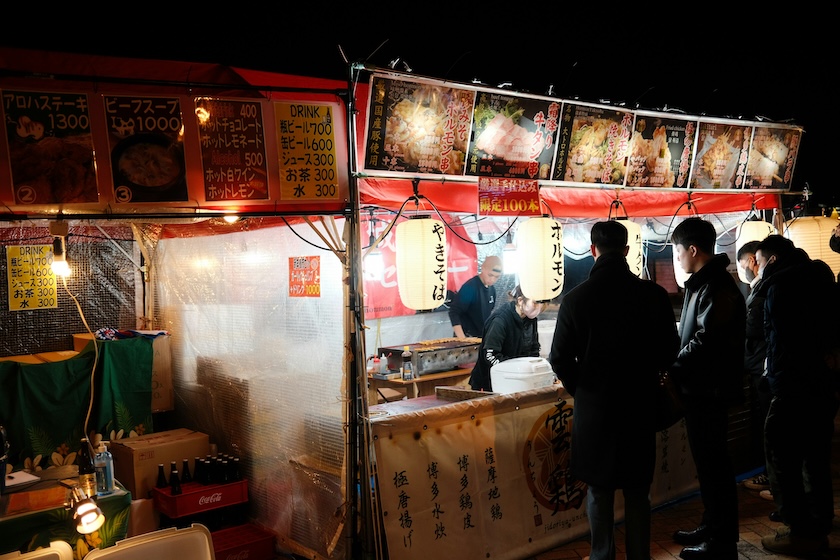
Expect sizzling grills, sweet smells, short queues, handwritten menus, plastic food displays, and vendors calling out to customers. You might eat takoyaki in Osaka, dango near a temple in Kyoto, crepes in Harajuku, seafood skewers at a market, or ramen at a Fukuoka yatai after dark.
The main thing to know is that Japanese street food is not always “walking food.” In many places, it is better to stand near the shop, use the designated eating area, or finish your snack before moving on.
These are popular options for finding Japanese street food, snacks, and casual bites. Some are true market streets, some are food-heavy shopping areas, and some are famous districts where travelers often go specifically to eat.
If you only have time for one city, Osaka is one of the easiest places to build a street food day. If you want the most traditional open-air food stall experience, Fukuoka’s yatai areas are the classic choice.
Street or Area |
Address / Area |
How to Get There |
Best For |
|---|---|---|---|
Kuromon Ichiba Market, Osaka |
2-4-1 Nipponbashi, Chuo-ku, Osaka |
About 5 minutes on foot from Nippombashi Station, or around 10 minutes from Namba Station |
Seafood, fruit, grilled snacks, Osaka market energy |
Dotonbori, Osaka |
Dotonbori, Chuo-ku, Osaka |
Walk from Namba Station toward the Dotonbori River and Ebisubashi Bridge |
Takoyaki, okonomiyaki, kushikatsu, neon nightlife |
Nishiki Market, Kyoto |
Nishikikoji-dori, Nakagyo-ku, Kyoto |
A short walk from Shijo Station, Karasuma Station, or Kyoto-Kawaramachi Station |
Kyoto snacks, pickles, dango, seafood, traditional food culture |
Nakamise Shopping Street, Asakusa, Tokyo |
1 Asakusa, Taito-ku, Tokyo |
About 3 to 5 minutes on foot from Asakusa Station via Kaminarimon Gate |
Ningyo-yaki, senbei, sweets, temple-side snacking |
Ameya-Yokocho, Ueno, Tokyo |
Ueno, Taito-ku, Tokyo, between Ueno and Okachimachi |
A short walk from Ueno Station or Okachimachi Station |
Market snacks, seafood, fruit, casual stalls, bargain shopping |
Takeshita Street, Harajuku, Tokyo |
1 Jingumae, Shibuya-ku, Tokyo |
Steps from Harajuku Station’s Takeshita Exit |
Crepes, sweets, colorful snacks, youth culture |
Nakasu and Tenjin Yatai Areas, Fukuoka |
Nakasu and Tenjin, Fukuoka City |
Use Nakasu-Kawabata Station for Nakasu, or Tenjin Station for Tenjin |
Ramen, yakitori, oden, late-night yatai culture |
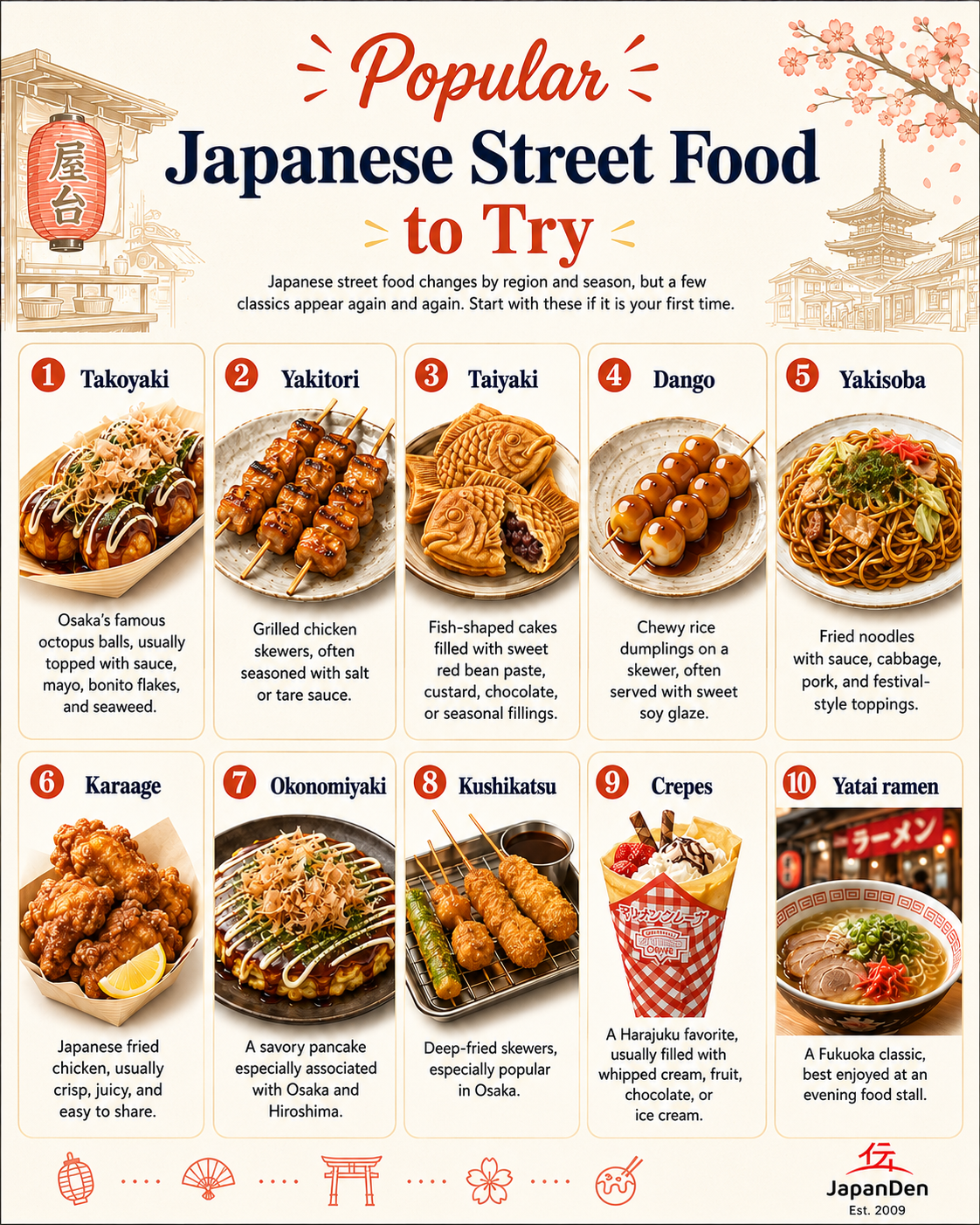
Japanese street food changes by region and season, but a few classics appear again and again. Start with these if it is your first time.
Takoyaki: Osaka’s famous octopus balls, usually topped with sauce, mayo, bonito flakes, and seaweed.
Yakitori: Grilled chicken skewers, often seasoned with salt or tare sauce.
Taiyaki: Fish-shaped cakes filled with sweet red bean paste, custard, chocolate, or seasonal fillings.
Dango: Chewy rice dumplings on a skewer, often served with sweet soy glaze.
Yakisoba: Fried noodles with sauce, cabbage, pork, and festival-style toppings.
Karaage: Japanese fried chicken, usually crisp, juicy, and easy to share.
Okonomiyaki: A savory pancake especially associated with Osaka and Hiroshima.
Kushikatsu: Deep-fried skewers, especially popular in Osaka.
Crepes: A Harajuku favorite, usually filled with whipped cream, fruit, chocolate, or ice cream.
Yatai ramen: A Fukuoka classic, best enjoyed at an evening food stall.
Japan’s street food is incredibly diverse, from the historic yatai stalls of Fukuoka to festival booths, market snacks, and lively food streets across the country. Here are some ways different travelers can enjoy it.
Street food is a perfect fit for solo travelers. You can try takoyaki, yakitori, taiyaki, karaage, dango, and more without sitting down for a full restaurant meal.
It is also a great way to sample lots of flavors in one afternoon. Think one skewer here, one sweet there, and suddenly you have built your own tasting route.
Street food is a staple in summer festival scenes. Look for familiar matsuri foods such as chocolate bananas, ramune, yakisoba, grilled corn, candied fruit, and shaved ice.
Markets and festivals can get crowded, but street food can be very family-friendly if you go early and choose less packed areas. Children often enjoy easy snacks such as taiyaki, karaage, melon pan, potato snacks, crepes, and fruit skewers.
Use a stroller with care in narrow markets and festival streets, especially during weekends.
Street food can be enjoyed at a relaxed pace if you choose permanent markets or food alleys with seating nearby. Fukuoka yatai, covered shopping streets, and market areas are often easier than very crowded festival stalls.
Street food is one of the most budget-friendly ways to eat in Japan. Many snacks are affordable, and you can build a casual meal by combining a few small items instead of sitting down at a restaurant.
Just remember that premium seafood, wagyu skewers, and tourist-heavy market items can be much more expensive than simple snacks.
Street food in Japan is easy to enjoy, but a few simple habits will make the experience smoother and more respectful.
For markets such as Kuromon Ichiba and Nishiki Market, morning to early afternoon is usually best. Popular items can sell out, and crowds often build later in the day.
For Fukuoka yatai, go in the evening. These stalls are part of the city’s nighttime food culture, not a morning market experience.
Cards are more common than they used to be, but small stalls and older shops may still prefer cash. Keep coins and small bills ready so you do not hold up the line.
Street food is saucy, grilled, fried, and sometimes eaten by hand. Wet wipes are useful after seafood, skewers, fruit, or anything covered in takoyaki sauce.
Public trash cans can be hard to find in Japan. If the stall has a bin, use it. If not, carry a small bag and dispose of your trash later.
A good rule: return containers and skewers to the shop where you bought them whenever possible.
Eating while walking is not usually illegal or forbidden, but it can be considered messy or inconsiderate in crowded areas. Some influencers from Japan have been mocking this rule as being exaggerated and saying you can do it without judgment, but we prefer playing safe, so we recommend to stand near the shop, use a designated eating space, or finish your food before moving on.
Markets and shopping streets can be narrow. Leave large suitcases in station lockers or at your hotel before visiting.
Street food days usually mean standing, walking, waiting, and carrying small snacks. Dress for comfort first.
Comfortable sneakers: Markets and food streets can be crowded, uneven, or wet near seafood stalls.
Crossbody bag or small backpack: Keep both hands free for skewers, drinks, photos, and payment.
Weather-appropriate layers: Many street food areas are outdoors or partly covered.
Clothes you do not mind getting a little sauce on: Takoyaki and yakisoba are delicious, but they are not always tidy.
A good street food day works best when you do not overplan every bite. Choose one main area, arrive hungry, and leave room to follow your nose.
Start with one anchor location, such as Nishiki Market in Kyoto, Dotonbori in Osaka, Ameyoko in Tokyo, or Nakasu in Fukuoka. Then add nearby cafés, shopping streets, temples, or evening walks around it.
For example:
In Osaka, pair Kuromon Ichiba with Namba, Dotonbori, Hozenji Yokocho, or Den-Den Town.
In Kyoto, pair Nishiki Market with Teramachi, Shijo, Gion, or Kiyomizu-dera.
In Tokyo, pair Asakusa’s Nakamise with Senso-ji, or pair Harajuku’s Takeshita Street with Meiji Shrine and Omotesando.
In Fukuoka, save yatai for the evening and keep dinner flexible.
Street food is one of the easiest food experiences to add to a Japan trip. You do not need reservations, formal clothing, or a long plan. You just need a good area, a little cash, and enough time to wander.
If food is a big part of your trip, stay near areas with strong transport connections. Namba is convenient for Osaka food streets, Shijo or Kawaramachi work well in Kyoto, Ueno or Asakusa are practical in Tokyo, and Tenjin is useful in Fukuoka.
For a single city, an IC card is usually enough. If you are travelling between Tokyo, Kyoto, Osaka, Hiroshima, or Fukuoka, compare individual Train Tickets, a JR Pass or Regional Pass based on your wider itinerary.
A Pocket Wi-Fi, SIM card, or eSIM makes it easier to use maps, translate menus, check opening hours, and save food spots as you go.
If it is your first time in Japan, a Meet & Greet service can make arrival smoother by helping with luggage, transport, and the first steps from the airport to your accommodation.
Tipping is not expected in Japan.
Cash is still useful, especially at small stalls and older markets.
IC cards such as Suica, PASMO, and ICOCA are convenient for transport and many small purchases.
Queue politely, keep your voice low in crowded places, and avoid blocking narrow market paths.
Q: What is Japanese street food?
A: Japanese street food is quick, casual food sold at stalls, markets, festivals, shopping streets, and food alleys. It usually comes in small portions and is easy to eat without a full restaurant meal.
Q: Where can I find street food in Japan?
A: You can find Japanese street food at markets, temple streets, matsuri festivals, yatai areas, and shopping streets. Popular options include Dotonbori, Kuromon Ichiba, Nishiki Market, Nakamise, Ameyoko, Takeshita Street, and Fukuoka’s yatai areas.
Q: What is the most popular street food in Japan?
A: Takoyaki is one of Japan’s most famous street foods, especially in Osaka. Other popular choices include yakitori, taiyaki, yakisoba, karaage, dango, okonomiyaki, and ramen from yatai stalls.
Q: Is Japanese street food safe?
A: Japanese street food is generally safe, especially at busy stalls where food is cooked fresh and turnover is high. As anywhere, use common sense: choose clean-looking stalls, fresh cooking, and popular vendors.
Q: Is it rude to eat while walking in Japan?
A: It is better not to eat while walking, especially in crowded streets or markets. Stand near the stall, use a designated eating area, or finish your food before continuing.
Q: How much does Japanese street food cost?
A: Many simple snacks cost around ¥300 to ¥800, while premium seafood, wagyu skewers, and tourist-heavy market items can cost more. You can snack cheaply, but some markets are not always budget spots.
Q: Do I need cash for Japanese street food?
A: Yes, it is smart to carry cash. Many stalls accept cards or digital payments, but smaller vendors may still prefer coins and small bills.
Q: What is the best street food area in Tokyo?
A: Nakamise in Asakusa is good for traditional sweets and snacks, Ameyoko in Ueno is strong for market-style food, and Takeshita Street in Harajuku is popular for crepes and colorful sweets.
Q: What is the best street food area in Osaka?
A: Dotonbori is the classic Osaka street food area for takoyaki, okonomiyaki, kushikatsu, and neon nightlife. Kuromon Ichiba is also popular for seafood, fruit, and market snacks.
Q: What are yatai in Japan?
A: Yatai are small open-air food stalls, especially famous in Fukuoka. They usually serve simple, filling foods such as ramen, yakitori, oden, and grilled dishes in a lively, close-up setting.
Why should I book with JapanDen?
How do I book a hotel or ryokan through JapanDen?
What types of accommodations do you offer in Japan?
How can JapanDen help with planning my trip?
As well as booking accommodation, JapanDen is a place to learn more about Japan and how you can make the most of your time in this special country. From in-depth region guides to stories from Japan, we’ll be regularly publishing carefully curated insights from Japanese culture, with recommendations for the best activities and attractions and the latest news. Looking forward, we’ll also be adding special community features so you can share ideas and inspiration with like-minded people. Please come back and visit us regularly as we continue to add new content. We want JapanDen to be your home away from home too.
Do you offer guided tours in Japan, and how can I book one?
As part of the JRPass.com group, we offer a dedicated Meet and Greet service with expert personal assistance on your arrival in Japan booked via JRPass.com, alongside nationwide and regional rail passes for travel. As JapanDen grows, we will be offering more services and activities to provide a complete Japan travel experience.
Can I purchase Japan Rail Passes through your website?
JapanDen is part of the JRPass.com group, book your passes and tickets directly on JRPass.com