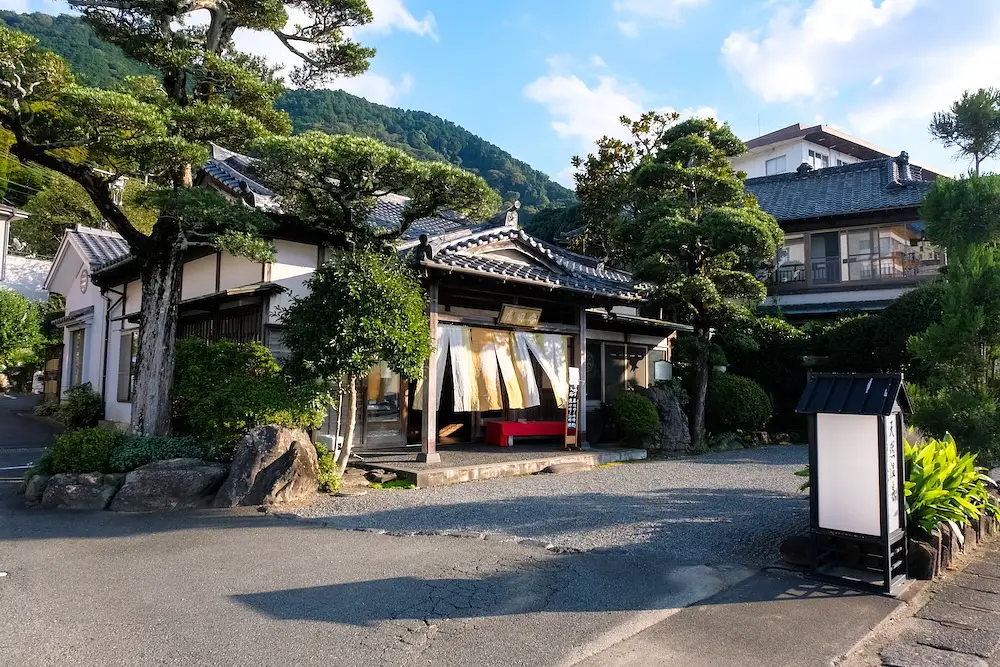
A Japanese home away from home
A minshuku is a small, often family-run Japanese guesthouse comparable to a traditional bed-and-breakfast. Many operate within or alongside the owners’ home, offering travelers a more personal and informal stay than a large hotel or full-service ryokan.
Minshuku are particularly common in rural areas, mountain villages, ski destinations, fishing communities, pilgrimage towns and other places where large hotels may be limited. Rooms are usually simple, and bathrooms, toilets and dining areas may be shared. In return, guests often receive home-style meals made with local ingredients and direct insight into everyday life in the surrounding region.
A minshuku can be affordable, but it should not automatically be treated as Japan’s cheapest accommodation. Rates are frequently charged per person rather than per room, and plans that include dinner and breakfast can cost more than a basic business hotel. What you are paying for is often the combination of accommodation, meals and a small-scale local experience.
Minshuku Key Details
The exact experience varies considerably between properties. Some minshuku feel like staying in a spare room in a family home, while others operate more like small traditional inns with several guest rooms and organized meal service.
Detail |
What You Can Generally Expect |
|---|---|
Accommodation style |
Small Japanese-style guesthouse, often owned and managed by a family |
Typical price |
A broad planning range is approximately ¥5,000–¥14,000 per person per night, often including dinner and breakfast. Heritage villages, ski season, holidays and upgraded rooms can cost more. |
Room type |
Commonly a private tatami room with futon bedding, although shared rooms and Western-style rooms also exist |
Bathroom |
Shared toilets, sinks and gender-separated bathing facilities are common; some properties offer ensuite rooms or reservable private baths |
Meals |
Home-style Japanese breakfast and dinner are common, but breakfast-only and room-only plans may also be available |
Meal times |
Usually fixed, particularly for dinner; late arrival may mean missing the meal |
Check-in and check-out |
Often approximately 3:00–6:00 PM for check-in and 9:00–10:00 AM for check-out, but each property sets its own schedule |
Amenities |
Basic and inconsistent; confirm whether towels, toothbrushes, sleepwear, hairdryers and toiletries are included |
Payment |
Card payment may be available online, but some properties require cash or payment directly at the accommodation |
Language support |
Varies; smaller rural properties may provide limited English support |
Best for |
Travelers interested in rural Japan, local food, traditional rooms and a quieter, more personal stay |
Less suitable for |
Travelers needing 24-hour reception, guaranteed ensuite facilities, extensive accessibility features or a highly flexible schedule |
Common locations |
Mountains, coasts, islands, ski villages, hot-spring areas, pilgrimage routes and heritage settlements |
Cancellation |
Determined by the individual property and booking plan; always read the exact conditions before paying |
The commonly quoted ¥5,000–¥14,000 range is a broad guide rather than a guaranteed current rate. Minshuku are generally moderately priced, but the cost changes according to location, meals, occupancy and season.
What to Expect from a Minshuku
The appeal of a minshuku lies in its small scale. Rather than entering a large lobby and dealing with rotating hotel staff, you may be welcomed directly by the owner or a member of the family.
Many rooms have tatami flooring, a low table and futon bedding. At some properties, the owners prepare the futon; at others, guests unfold and store their own bedding. Toilets, sinks and bathing areas are frequently shared, and the bath may be available only during designated hours.
Minshuku are usually simpler than ryokan. Rooms may have fewer amenities, and older buildings may provide less sound isolation than a modern hotel. You may hear footsteps, doors, conversations or the owners preparing breakfast. This is part of staying in a small shared building, but it may not suit light sleepers.
The level of interaction also varies. Some owners enjoy explaining the area, recommending walks or discussing local food. Others provide polite, efficient service while giving guests privacy. Booking a minshuku does not guarantee an extended homestay-style cultural exchange.
Meals: Often the Highlight of the Stay
For many travelers, dinner and breakfast are the main reason to choose a minshuku. Meals are generally less formal than the elaborate kaiseki served at an upscale ryokan, but they may feature vegetables, seafood, rice, pickles, soups and regional dishes prepared by the owners.
Coastal minshuku may specialize in freshly caught seafood, while mountain properties might serve mushrooms, river fish, preserved vegetables, local beef or hot-pot dishes. In Minamisanriku, for example, the tourism association promotes minshuku operated by fishing families whose meals highlight local seafood.
Meals are usually served at fixed times in a shared dining room. A stay advertised as one night with two meals normally includes dinner on the arrival day and breakfast the following morning. Arriving after dinner service has started may cause problems because a small family kitchen cannot necessarily hold or recreate the meal later.
Dietary Restrictions and Allergies
Do not assume that every minshuku can provide vegetarian, vegan, halal, kosher, gluten-free or allergy-safe meals. Some can adapt their menus with advance notice, while others cannot safely make changes.
Japanese stock and seasonings may contain fish, shellfish, soy, wheat or other ingredients that are not obvious from the finished dish. Requests should be made during booking, with specific details rather than a vague note such as “no meat.”
Regional booking services illustrate how much policies vary: some Kumano Kodo minshuku can accommodate allergies or vegetarian requirements, while others explicitly state that they cannot. Same-day requests are often impossible because ingredients are purchased and prepared in advance.
Travelers with severe allergies should obtain written confirmation before booking and understand that a small family kitchen may not be able to prevent cross-contact.
Privacy, Bathrooms and Shared Facilities
A minshuku room is often private, but that does not mean the entire stay offers hotel-style privacy. Toilets, washbasins and baths may be shared with the owners or other guests.
Before booking, check whether the listing says:
Private room or shared room
Ensuite toilet or shared toilet
Private shower, communal bath or no bathing facility
Gender-separated bath or reservable private bath
Lockable room
Futon or Western bed
Shared dining area
Shared kitchen or laundry facilities
Do not rely only on the main property description. Different room plans within the same minshuku may have different bathroom arrangements.
Using the Bath
A communal bath is for soaking rather than washing. Wash and rinse your body at the shower area before entering, keep towels out of the water and tie up long hair. Guests normally bathe without swimsuits unless a property specifically states otherwise.
Some minshuku use ordinary heated bathwater, while others have genuine hot-spring water. The presence of a large communal bath does not automatically mean it is an onsen.
Tattoos
Tattoo rules depend on the individual bath. Some properties allow tattoos, some permit small tattoos when covered, and others prohibit them in shared facilities.
Travelers with tattoos should contact the minshuku before booking. A room with its own bath or a reservable private bath may offer a workable alternative, but availability should be confirmed rather than assumed.

Who are Minshuku for?
Minshuku work particularly well for travelers who value location, local meals and atmosphere more than extensive facilities.
They are a good match for:
Travelers exploring rural towns or villages
Hikers and pilgrims
Skiers and winter visitors
Cyclists
Food-focused travelers
Couples seeking a quieter stay
Families comfortable with tatami rooms
Travelers who enjoy small independent businesses
Visitors who do not need hotel-style services
They may be less suitable for:
Travelers who require a private bathroom
Anyone uncomfortable with communal bathing
Guests planning to arrive late at night
Travelers who need 24-hour reception
People with severe dietary needs that have not been confirmed
Visitors carrying several large suitcases
Light sleepers sensitive to noise
Guests who require guaranteed step-free access
Solo Travelers
Many minshuku accept solo guests, but not every room or meal plan is available for single occupancy. Some charge a supplement, while others require at least two guests because of room allocation or meal preparation.
A Kumano Kodo accommodation listing, for example, offers certain rooms only when occupied by two or more people. Solo travelers should check the number of guests permitted on the exact plan rather than assuming that an available room can be booked for one.
Families with Children
Tatami rooms can work well for families because several futons can be arranged in one space. However, child pricing is not standardized.
Properties may charge separately for:
A child-sized meal
An adult meal
Futon bedding
Children sharing an adult’s futon
Facility or bathing fees
Confirm stair access, bathroom arrangements and whether young children are accepted before booking.
What are people saying about Minshuku in Japan
The reviews vary by property, but positive reviewes are found often.
“The guesthouse had old facilities, but it was clean, the staff were kind, and the breakfast was hearty—I was delighted!” Minshuku Wakatake at Hotels.com
“You can experience Japanese hospitality. Enjoy rooms with the warmth of tatami mats and hearth-cooked dishes made with delicious local ingredients.” Minshuku Fukufuji

Minshuku, Ryokan, Minpaku and Guesthouses: What Is the Difference?
These terms overlap in everyday travel listings, but they do not mean exactly the same thing.
Minshuku
A minshuku is generally a small, family-run Japanese-style bed-and-breakfast. It usually offers simpler facilities and less formal service than a ryokan.
The word describes the style and identity of the accommodation; it is not a standalone category in Japanese accommodation law. A minshuku may operate with permission under the Inns and Hotels Act, but it should not automatically be described as legally classified as “simple lodging.”
Ryokan
A ryokan is a traditional Japanese inn. Ryokan range from modest local businesses to luxury resorts, but they generally offer more extensive service, larger facilities or more elaborate meals than a typical minshuku.
The dividing line is not always obvious. Some properties call themselves ryokan-minshuku, and a modest ryokan may resemble a well-equipped minshuku.
Minpaku
A minpaku is private lodging, often comparable to a short-term apartment or house rental. It may be host-present or unhosted and is often self-catering.
Under Japan’s Private Lodging Business Act, registered minpaku operating through that system may provide accommodation for no more than 180 days per year. Other legal routes include permission under the Inns and Hotels Act and special-zone private lodging.
A minpaku is therefore not automatically more or less “legal” than a minshuku. The important question is whether the accommodation is operating under the appropriate registration, permission or special-zone framework.
Guesthouse or Hostel
In English-language listings, “guesthouse” may refer to a hostel with dormitory beds, a small inn with private rooms or even a property that identifies as a minshuku in Japanese.
Check the room and facility details instead of relying on the category name alone.
Pro Tips
A little preparation makes a minshuku stay much easier.
1.Confirm the Exact Room
Check the individual room plan for the toilet, bath, bedding and maximum occupancy. Photographs of one upgraded room may not represent the room you are booking.
2.Arrive on Time
Tell the property when you expect to arrive, especially when dinner is included. Some rural accommodations require check-in before sunset or before a specific meal-preparation deadline.
One Kumano Kodo property, for example, lists check-in between 3:00 PM and 6:00 PM and asks hikers to arrive before dark for safety.
3.Ask About a Curfew
Do not assume you can enter at any hour. The front door may be locked overnight, and the owners may not operate a 24-hour reception desk.
Confirm the latest return time when planning evening sightseeing, festivals or restaurants away from the property.
4.Carry Some Cash
Even when a booking platform accepts a card, additional meals, drinks, bathing fees or direct payment at the property may require cash. One current Kumano minshuku listing, for example, explicitly states that credit cards are not accepted.
5.Bring Personal Essentials
Pack any personal toiletries or sleepwear you consider essential. Do not assume that the following will be provided:
Toothbrush
Razor
Hairbrush
Skincare products
Pajamas or yukata
Large bath towel
Laundry detergent
International power adapter
6.Protect the Tatami
Do not drag suitcases across tatami mats. Lift them or open them in the entrance area, on a hard floor or on a protective luggage mat when one is provided.
7.Check Luggage Services
Small minshuku do not necessarily offer the same luggage forwarding, storage or reception services as major hotels. Ask before sending a suitcase to the property and confirm whether someone will be present to receive it.
On walking routes such as the Kumano Kodo, some accommodation plans specifically offer luggage shuttle arrangements, while others do not.
8.Download Important Information
Save the Japanese property name, address, telephone number, booking confirmation and transport timetable offline. Rural mobile coverage and Wi-Fi quality can vary, so getting a Pocket Wifi may be a good idea.

Minshuku Etiquette
The atmosphere is informal, but guests are still staying in a small shared property—sometimes inside the owner’s home.
Remove Your Shoes
Take off outdoor shoes at the entrance and use the slippers provided. Do not wear ordinary slippers on tatami mats.
Separate toilet slippers may be provided. Leave them inside the restroom rather than accidentally wearing them through the property.
Respect Meal Times
Arrive in the dining room at the stated time. Delays affect the temperature, texture and presentation of the food and may disrupt the family preparing it.
Keep Noise Low
Sound carries easily in traditional buildings. Keep conversations, televisions and phone calls quiet at night and early in the morning.
Follow Bath Rules
Wash before entering, do not wear a swimsuit, keep towels out of the water and leave your phone or camera outside the bathing area.
Ask Before Photographing People
Photographing your room or meal is usually less sensitive than photographing the owners, their family or private parts of the house. Ask permission before including people or domestic areas in photographs.
Where to Find Minshuku
Minshuku are less common in major business districts because hotels already serve those markets. They are most useful in places where the accommodation itself connects visitors with the surrounding landscape or community.
Shirakawa-go and Gokayama
Several historic gassho-zukuri farmhouses in Shirakawa-go, Ainokura and Suganuma operate as minshuku. These stays allow visitors to experience the villages after daytime crowds leave, although availability is limited and booking early is essential.
Kumano Kodo
Minshuku are an important part of the Kumano Kodo experience, providing meals, bathing facilities and accommodation between walking stages. Meal times, check-in deadlines, luggage services and dietary support should be reviewed carefully because villages may have few alternative restaurants or shops.
Ski and Mountain Villages
Areas such as Nozawa Onsen have family-run minshuku serving skiers and snowboarders. These can offer a more local and affordable alternative to a large resort hotel, although bathrooms and equipment-storage arrangements vary.
Fishing Villages and Coastal Regions
Coastal minshuku frequently emphasize seafood and may be operated by fishing families. They are found around peninsulas, smaller ports and islands where public transport can be limited.
Islands
Minshuku are common on some smaller islands because they can operate with fewer rooms than a conventional resort. Confirm ferry schedules carefully, as bad weather or an early final sailing may affect arrival.

How to Find and Book a Minshuku
There is no single booking platform containing every minshuku in Japan.
Try a combination of:
Major international accommodation websites
Japanese booking platforms
Regional tourism websites
Local visitor information centers
Trail or pilgrimage reservation services
The property’s official website
Direct email or telephone contact
JNTO maintains a list of accommodation reservation resources, while local tourism organizations often feature properties that are difficult to find through broad English-language searches.
Search using both the place name and the word “minshuku.” Using the Japanese term 民宿 may reveal additional local listings, but confirm that the booking conditions and room details are fully understood before paying.
Direct websites may show different meal plans, room inventory or cancellation terms from third-party platforms. Compare the complete price rather than only the headline room rate.
Getting There and Around
Many minshuku are reached through a combination of intercity rail, local train, bus, ferry, taxi or a pickup arranged by the accommodation.
Before booking, identify:
The nearest station or bus stop
The final bus or ferry of the day
Whether the property provides pickup
Whether pickup must be reserved
Walking distance and terrain
Seasonal road closures
Whether luggage can be transported
The cost of a taxi if public transport is missed
A map showing that a minshuku is “near” a station can be misleading in a mountain village, especially when the route includes steep roads, snow or unlit paths.
Should You Buy a Japan Rail Pass?
A Japan Rail Pass does not provide unlimited use of all public transportation in Japan. It primarily covers eligible JR-operated trains and selected JR services; many local buses, private railways, subways, ferries and taxis are not included.
A nationwide pass may be useful when the minshuku stay forms part of a longer journey involving several expensive intercity JR trips. For a shorter regional itinerary, individual tickets or a regional pass may offer better value.
Use the JR Fare Calculator to compare individual rail fares with the cost of a pass. Travelers concentrating on one part of the country can also review regional rail passes, which cover specific networks or travel corridors rather than all of Japan.
Remember that the final journey from a JR station to a rural minshuku may still require a local bus, private railway, taxi or property pickup.
Planning Your Stay
A minshuku is often best used strategically rather than as the only accommodation type throughout an entire trip.
Consider staying in:
Hotels when you need convenient stations, late check-in and luggage handling
Minshuku when visiting villages, trails, islands, ski areas or food-producing regions
Ryokan when the priority is formal service, elaborate meals or an onsen resort experience
Minpaku when you need a whole home, kitchen or longer self-catering stay
For many itineraries, one night provides an introduction to the experience. Two nights can be worthwhile when the surrounding area has hiking, cycling, beaches, skiing or villages to explore. Longer stays make sense when you are intentionally slowing down rather than using the property only as a place to sleep.
Before confirming the reservation, check:
The exact room and bathroom type
The meal plan and serving times
Dietary and allergy policies
Check-in deadline and curfew
Payment method
Child and solo-traveler rules
Tattoo policy for shared baths
Accessibility and stairs
Luggage storage or forwarding
Public transport for arrival and departure
More to Know
The original history of minshuku cannot be reduced to one moment when mountain homes began accepting hikers. Japanese households, inns and roadside communities have accommodated travelers in different ways for centuries, while the modern term now covers a range of small family-run guesthouses.
Legally, “minshuku” is not a separate national licensing category. A property using the name may operate under the Inns and Hotels Act, while a private short-term rental may instead operate under the Private Lodging Business Act or another permitted framework.
Under the Private Lodging Business Act, registered minpaku are limited to 180 operating days per year. That restriction should not automatically be applied to a licensed minshuku operating under the Inns and Hotels Act.
The accommodation name alone therefore does not prove which legal framework applies. Book through reputable platforms, official tourism organizations or the property itself, and avoid listings that cannot provide a complete address or clear registration information.
FAQs About Minshuku in Japan
Q: What exactly is a minshuku?
A: A minshuku is generally a small, family-run Japanese guesthouse similar to a bed-and-breakfast. It commonly offers simple Japanese-style rooms, shared facilities and optional or included home-style meals.
Q: What is the difference between a minshuku and a ryokan?
A: A minshuku is usually smaller, simpler and less formal. A ryokan generally provides more extensive service, amenities and elaborate meals, although modest ryokan and well-equipped minshuku can overlap considerably.
Q: Is a minshuku the same as a minpaku or Airbnb?
A: No. A minshuku is usually an owner-operated guesthouse or inn, while minpaku generally refers to private short-term lodging such as a house or apartment rental. The legal and service arrangements are different.
Q: Do minshuku rooms have private bathrooms?
A: Often they do not. Shared toilets, sinks and baths are common, but some properties have ensuite rooms or private baths. Check the exact room description before booking.
Q: Are dinner and breakfast included?
A: Many minshuku offer a plan with dinner and breakfast, but some also sell breakfast-only or room-only stays. Prices are usually shown per person, so confirm what is included in the selected plan.
Q: Can minshuku accommodate vegetarians or food allergies?
A: Some can, while others cannot. Contact the property before booking, explain the restriction precisely and obtain confirmation. Same-day meal changes may not be possible.
Q: Can travelers with tattoos use a minshuku bath?
A: It depends on the property. Tattoos may be restricted in shared baths even when they are not an issue elsewhere in the accommodation. Ask in advance about tattoo rules, coverings and private-bath options.
Q: Can solo travelers stay at a minshuku?
A: Many accept solo travelers, but some rooms or meal plans require at least two guests or charge a single-occupancy supplement. Search using one guest from the beginning to see the correct availability.
Q: Do minshuku have curfews?
A: Some do, and others set a latest check-in or return time. Do not assume that the entrance and reception remain accessible throughout the night.
Q: How far in advance should I book?
A: Book as soon as your itinerary is firm for heritage villages, festivals, weekends, ski season and popular walking routes. Small minshuku may have only a few rooms, so availability can disappear quickly even when the surrounding destination does not appear busy.