Japan's most magical after-dark experiences
Venue: Nationwide — Tokyo, Mie, Kobe, Sapporo, Nagasaki, and beyond
When: November through mid-February
Japan does winter illuminations like nowhere else. From champagne-gold boulevards near Tokyo Station to the world's largest outdoor Baccarat crystal chandelier in Ebisu, the country's winter light displays run from November through February — and many are free. Here is the practical guide to the best ones, with a one-night pick per region.
Winter Illumination Japan 2026 Key Details
Season |
November 2026 – February 2027 (individual event dates vary — confirm each on official sites before visiting) |
Locations |
Tokyo, Mie, Kobe, Sapporo, Nagasaki, Tochigi |
Admission |
Mix of free and ticketed (noted per event below) |
Best For |
Couples, families, solo travelers, photographers |
What to Expect at Japan's Winter Illuminations
Tokyo Winter Illuminations
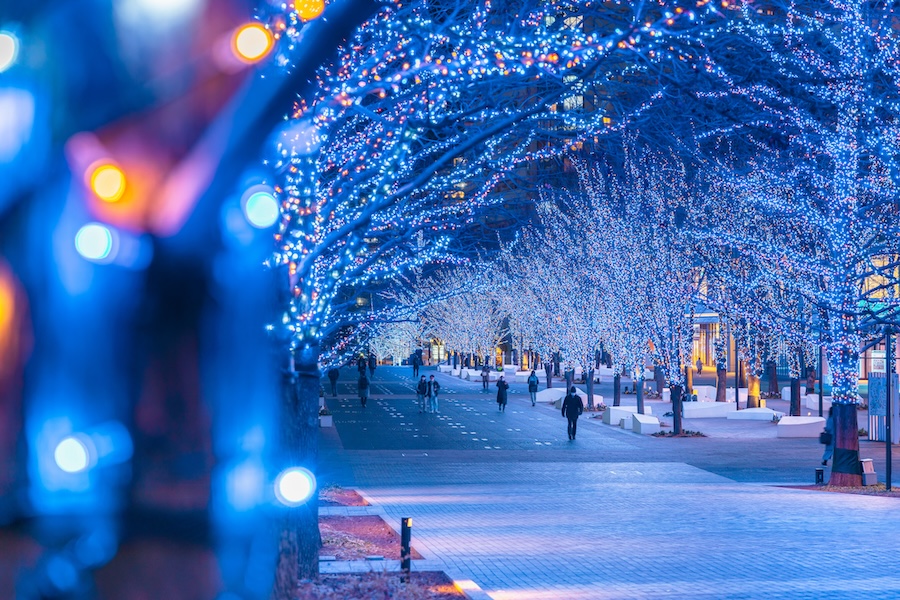
Roppongi Hills Keyakizaka Illumination: Blue and white LEDs light up the keyaki boulevard for free from late November through mid-January, nearest to Roppongi Station.
Marunouchi Illumination: Champagne-gold zelkova trees line 1.2km from Tokyo Station toward Hibiya for free, running mid-November through late February.
Ebisu Garden Place — Baccarat Eternal Lights: The world's largest outdoor Baccarat crystal chandelier hangs above the central plaza for free, five minutes from Ebisu Station.
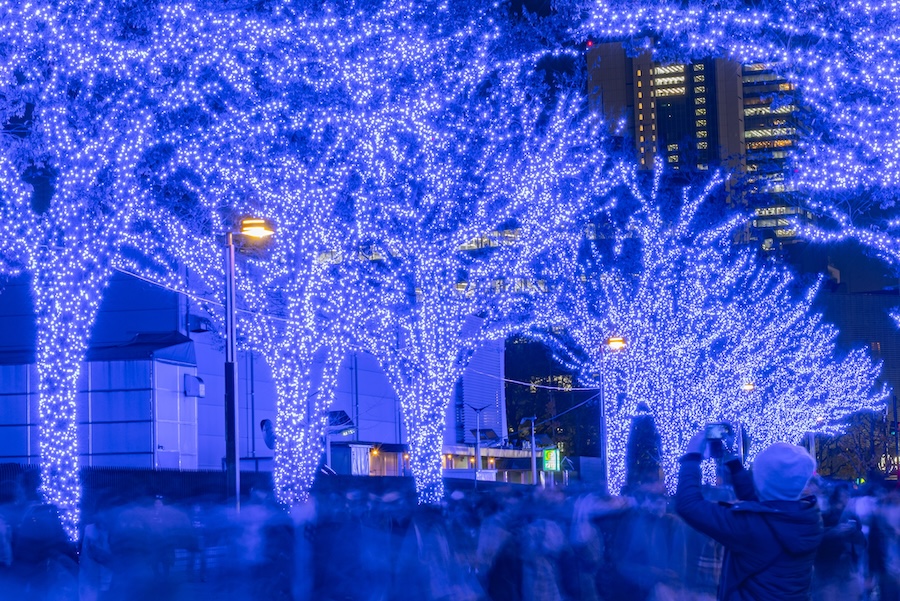
Shibuya Ao no Dōkutsu (Blue Cave): A free tunnel of blue LEDs along the Yoyogi Park–Shibuya corridor, with exact dates varying each year.
Caretta Shiodome: Free themed projection-mapping shows illuminate a large installation near Shiodome Station, running mid-November through mid-February.
One-night Tokyo pick: Walk Marunouchi first, then head to Roppongi Hills for the blue illuminations and dinner.
Beyond Tokyo
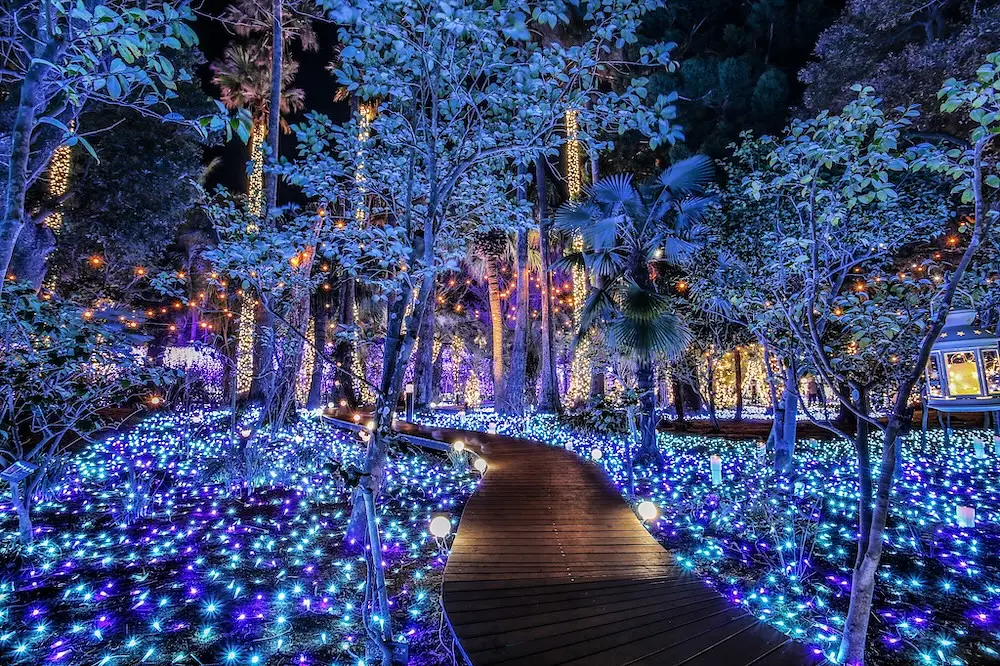
Nabana no Sato (Mie): Japan's largest illumination with 8 million LEDs runs from November through May, ticketed at around ¥2,500, nearest to Nagashima via Nagoya.
Kobe Luminarie: A free early-December memorial illumination near Motomachi Station, held annually in memory of the 1995 earthquake victims.
Sapporo White Illumination: Free warm white lights fill Odori Park from November through February, conveniently overlapping with the Sapporo Snow Festival.
Huis Ten Bosch Kingdom of Light (Nagasaki): A ticketed Dutch-themed resort transformed into one of Japan's most elaborate illumination parks each winter.
One-night outside Tokyo pick: Nabana no Sato for scale; Kobe Luminarie for meaning.
Browse JapanDen's hotel listings in Tokyo, Kobe, and Nagasaki to stay within easy reach of your chosen venues.
Who Is Winter Illumination Japan For?
Most events are free, walkable, and require no advance booking, ideal for any traveler passing through during the season. Couples and photographers get the most out of the Tokyo circuit. Families will enjoy the more theatrical ticketed experiences at Nabana no Sato and Huis Ten Bosch. Travelers with a rail pass can build an illumination stop into a multi-city itinerary at almost no extra cost.
Pro Tips
Visit on weekday evenings to avoid weekend crowds at Roppongi Hills and Marunouchi.
Plan a walking route connecting two or three Tokyo venues in one evening. Roppongi, Shiodome, and Marunouchi cluster well together.
Book Nabana no Sato and Huis Ten Bosch tickets in advance for peak December weekends.
Bring a power bank so you are not caught short during evening photography sessions.
What to Wear
Tokyo after dark in December sits around 3°C to 8°C. Bring a winter coat, gloves, and comfortable walking shoes. Sapporo requires heavy insulated layers and grip boots. Nabana no Sato involves extended outdoor walking, so dress warmly regardless of daytime temperatures.
How to Get to Japan's Winter Illuminations
Most Tokyo illuminations are on or near the JR Yamanote Line or Tokyo Metro, so no special transport planning is needed.
For events outside Tokyo, a JR Pass covers the Shinkansen to Nagoya for Nabana no Sato and connections to Kobe and Sapporo. A Regional Pass works better for a Kansai-only trip covering Kobe and Osaka.
Keep a Pocket Wi-Fi on hand to check live hours and navigate between venues after dark — SIM cards are available as an add-on at JR Pass checkout.
More About Winter Illumination Japan
Japan's winter illumination season runs nationwide from November through February, with some events like Nabana no Sato extending as late as May. Kobe Luminarie, first held in 1995, commemorates the victims of the Great Hanshin Earthquake and has grown into one of Japan's most emotionally significant annual light events (source).
Planning Your Visit
The Tokyo circuit needs almost no advance planning — most events are free and walkable. For events outside Tokyo, book your rail pass and accommodation early. A Meet & Greet service at Tokyo or Osaka airports sets you up smoothly for an evening-heavy itinerary from day one.
FAQs
Q: Are Japan's winter illuminations free?
A: Most major Tokyo illuminations are free, while Nabana no Sato, Huis Ten Bosch, and Ashikaga Flower Park charge admission.
Q: When is the best time to see winter illuminations in Japan?
A: Mid-November through late December is peak season, though Nabana no Sato and Sapporo White Illumination run until February.
Q: What is the biggest winter illumination in Japan?
A: Nabana no Sato in Mie Prefecture, with around 8 million LEDs, is widely considered Japan's largest and runs from November through May.
Q: What is the Shibuya Blue Cave illumination?
A: The Shibuya Ao no Dōkutsu is a free tunnel of blue LED lights along the Yoyogi Park corridor, with exact dates varying by year.
Q: Do Japan's winter illuminations run on weekdays?
A: Yes, all events listed run daily throughout their seasons. Weekday evenings are significantly less crowded than weekends, particularly in December.
Q: Do I need to book tickets for Japan's winter illuminations in advance?
A: Free events need no booking. For Nabana no Sato and Huis Ten Bosch, advance tickets are recommended for December weekends.
Q: Which winter illumination in Japan is best for families?
A: Nabana no Sato and Huis Ten Bosch are the most family-friendly, with large grounds, food stalls, and displays that work well for all ages.
Q: Can I see multiple illuminations in one trip to Tokyo?
A: Yes, Marunouchi, Roppongi Hills, and Caretta Shiodome can easily be combined in a single evening.
Q: How long do Japan's winter illuminations last each night?
A: Most run until around 10:00 PM, with Nabana no Sato and Huis Ten Bosch running later on peak nights.