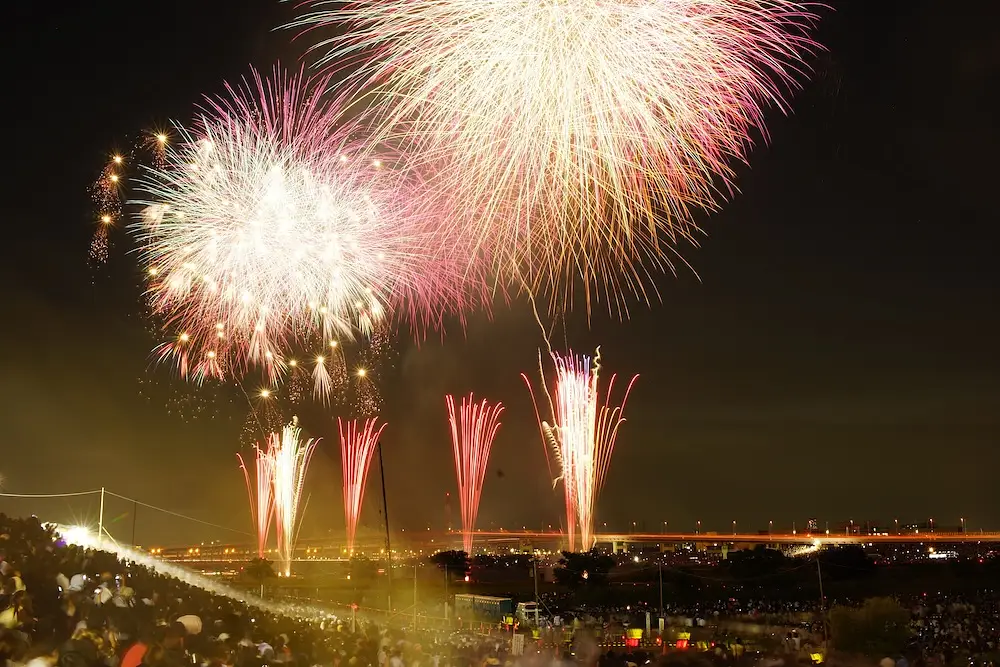
Tokyo’s biggest summer date
Venue: Sumida River near Asakusa, Tokyo
When: Last Saturday of July
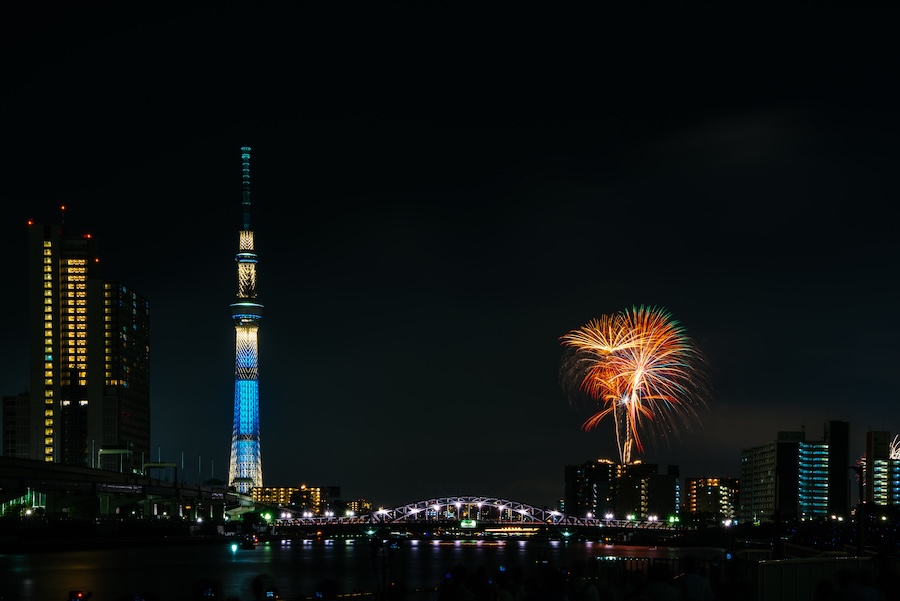
The Sumida River Fireworks Festival is Tokyo's most opulent annual reminder that summer can be hot, crowded, and tempting. The festival, known in Japanese as the Sumidagawa Hanabi Taikai, sets off approximately 20,000 fireworks from two locations beside the river near Asakusa. Nearly a million onlookers gather dressed in yukata, clutching fans, and pretending not to sweat through both. It's beautiful, historic, free to watch, and incredibly busy. In other words, it contains all of the elements of a memorable Tokyo relationship: excitement, close proximity, and a stunning ending.
Sumida River Fireworks Festival: Key Details
Dates |
Last saturday of July, Annually |
Opening Hours |
7:00 PM–8:30 PM |
Location |
Sumida River, near Asakusa |
Admission |
Free in public viewing areas |
Official Website |
|
Nearest Station |
Asakusa, Kuramae, Honjo-Azumabashi |
Organizer |
Sumida River Fireworks Festival Executive Committee |
What to Expect at Sumida River Fireworks Festival
Expect massive crowds, summer food vendors, colorful yukatas, police-managed pedestrian lanes, and fireworks over one of Tokyo's most iconic rivers. The festival uses two launch sites.
Venue 1, located between Sakura-bashi and Kototoi-bashi, begins at 7:00 p.m. and traditionally features skilled pyrotechnic displays and competitive pyrotechnics.
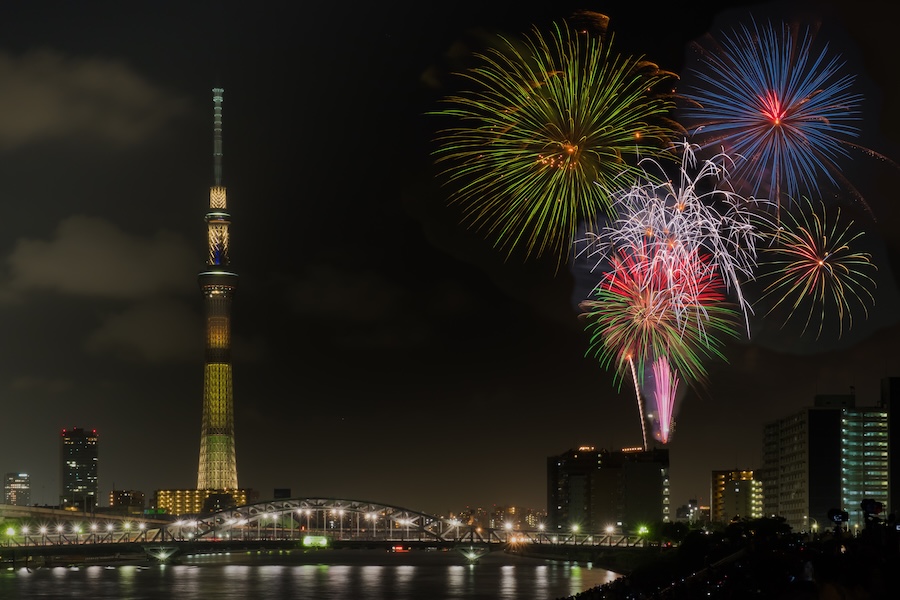
Venue 2, between Komagata-bashi and Umaya-bashi, begins later and has magnificent views of the Tokyo Skytree nearby. It is especially popular among photographers, who claim that fireworks would not be photogenic without the tallest building in Japan.
Attempting to go between the two sites during the display is unfeasible. Before the evening begins, choose one area and make a commitment. Some relationships benefit from leaving choices open; fireworks viewing does not.
Who Is the Sumida River Fireworks Festival For?
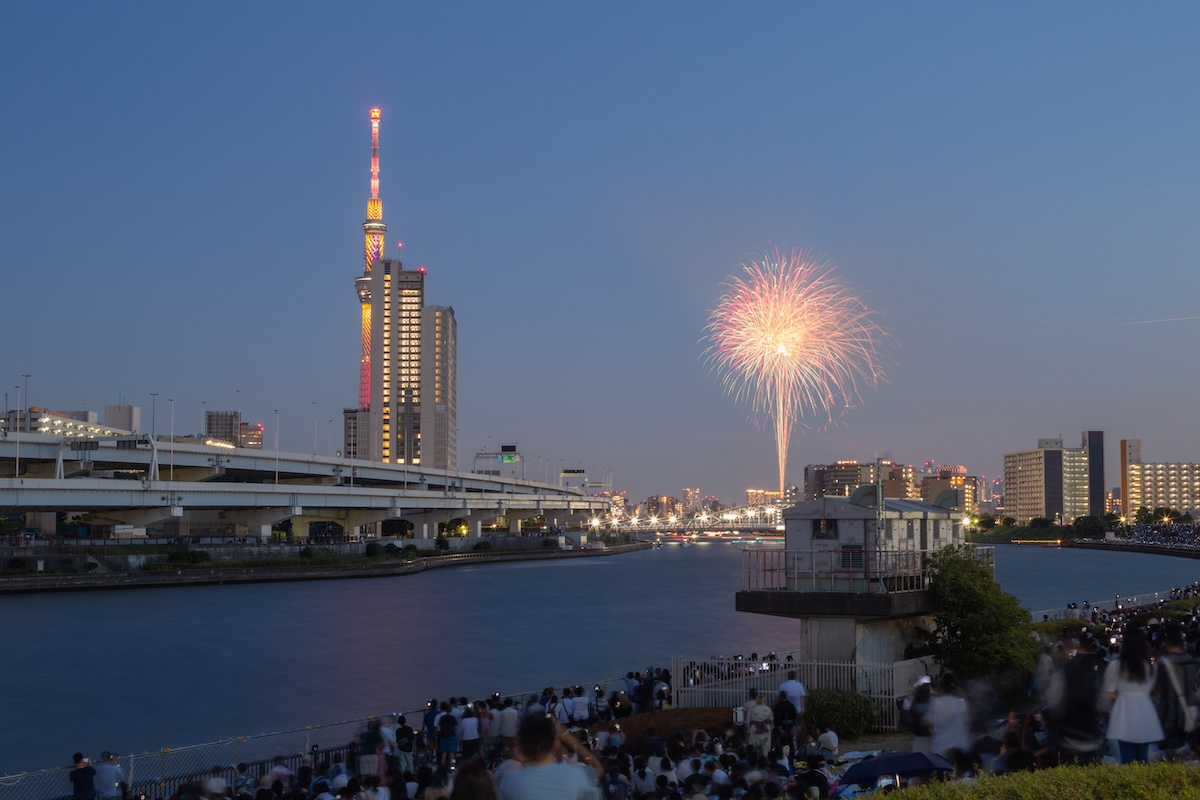
The event is ideal for first-time Tokyo visitors, couples, families with older children, photographers, and anybody looking to experience a major Japanese summer festival.
It is less comfortable for travelers who dislike large crowds, have difficulty standing for extended periods of time, or require easy access to restrooms and sitting. Families with little children should find a quieter viewing place away from central Asakusa and plan to leave before nightfall.
English signage is present near major stations, although temporary restrictions might make familiar streets appear shockingly obscure. Reliable mobile data via Pocket Wi-Fi or SIM card significantly improves the utility of live maps.
Pro Tips
The fireworks are free. The good view, however, requires strategy.
Arrive around 3:00 PM–4:30 PM to inspect your chosen area.
Buy drinks and snacks early; nearby convenience stores can sell out.
Carry cash for smaller stalls.
Bring water, sunscreen, a fan and a charged power bank.
Use a small leisure sheet only where sitting is permitted.
Avoid depending on Asakusa Station immediately after the finale.
Consider Kuramae or Honjo-Azumabashi, following official crowd instructions.
Check the official website on the morning of the event for weather updates.
What to Wear at Sumida River Fireworks Festival
A yukata is customary and photographs well, but it is not required. Comfortable summer apparel and supportive shoes are significantly more vital than producing an appearance that is painful after forty minutes.
Yukata rentals near Asakusa should be reserved in advance. Select sandals that you can actually walk in. Fashion may imply sacrifice, but stopping circulation before the first fi
How to Get to the Sumida River Fireworks Festival
For Venue 1, Asakusa and Honjo-Azumabashi are among the most useful stations. Venue 2 is also accessible from Kuramae and Asakusa.
Road closures, one-way pedestrian routes and station-entry controls may apply. Follow police signs rather than assuming your usual Google Maps route remains available.
After 8:30 PM, Asakusa Station becomes extremely congested. Walking to a neighbouring station can be faster and considerably better for your relationship with humanity.
Nearby Recommendations
Make the event part of a larger Asakusa day, rather than only coming for the fireworks.
Visit Senso-ji early, browse Nakamise retail strip, and sample seasonal snacks. Ryogoku and the Ryogoku Kokugikan district, located farther south along the river, add sumo history to the day.
Tokyo Skytree has special festival viewing arrangements, however availability is limited and usually needs advance booking or a lottery. Nearby Asakusa and Skytree hotels also sell out rapidly, especially for rooms and rooftops with river views.
More About the Sumida River Fireworks Festival
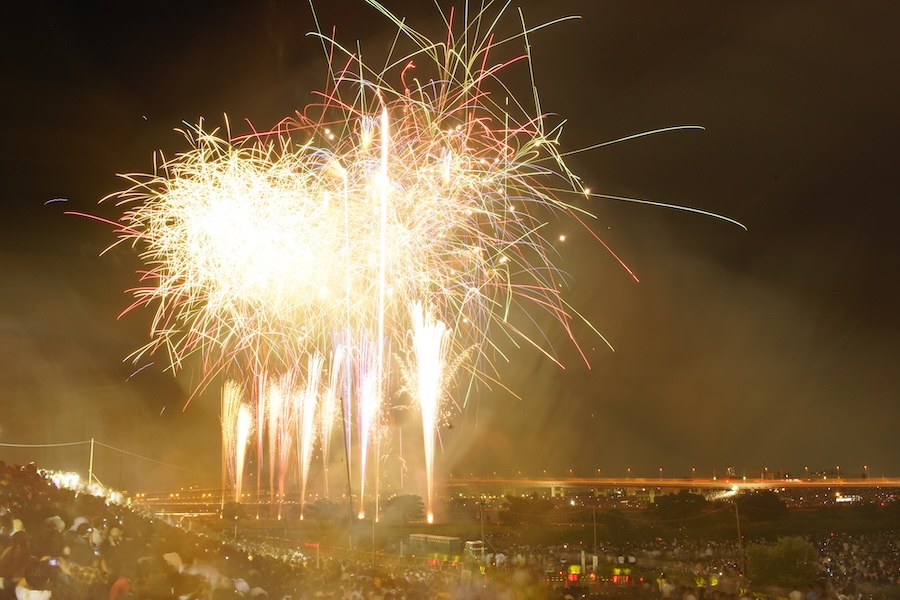
The event began with the Ryogoku River Opening exhibition in 1733, following a year of hunger and disease that ravaged the population. Later, the competition between the Kagiya and Tamaya fireworks houses resulted in the customary crowd yells of "Kagi-ya!" and "Tama-ya!" The event gradually vanished until reappearing under its current name in 1978. So, certainly, Tokyo has been creating stunning summer nights for generations. The need to wow the crowd remained constant, even as technology progressed.
Planning Your Visit
Book your stay near Asakusa or Tokyo Skytree as soon as possible, especially if you want a rooftop package or a river-view room.
A JR Pass is not required for travel inside central Tokyo, however a Japan Rail Pass or regional pass may be suitable for a longer itinerary that includes the event and neighboring cities. Pocket Wi-Fi facilitates route adjustments, and SIM cards can be added during pass checkout.
First-time visitors who arrive just before the event may also benefit from a Meet & Greet service. Tokyo is thrilling enough without starting a romance by getting lost at the airport.
FAQs About the Sumida River Fireworks Festival
Q: Is the Sumida River Fireworks Festival free?
A: Yes. Public viewing areas are free, although premium hotel rooftops and Tokyo Skytree programmes may charge or require reservations.
Q: When is the 2026 festival?
A: It is scheduled for Saturday, July 25, from 7:00 PM to 8:30 PM.
Q: How many fireworks are launched?
A: Approximately 20,000 fireworks are launched across the two venues.
Q: Where is the best place to watch?
A: Venue 1 suits traditional competition displays, while Venue 2 is popular for Tokyo Skytree views.
Q: Can I watch from a bridge?
A: Bridge access is controlled and stopping may be prohibited. Follow event-day police instructions.
Q: What happens if it rains?
A: Light rain may not stop the event, but severe weather can cause cancellation rather than postponement.
Q: How early should I arrive?
A: Arrive by mid-afternoon if you want time to find a viewing area and buy supplies.
Q: Is the festival suitable for children?
A: Yes, but the crowds can be overwhelming. Choose a less central location and plan an early exit.
Q: Can I see the fireworks from Tokyo Skytree?
A: Special viewing may be offered, but places are limited and advance arrangements are required.
Q: Which station should I use after the festival?
A: Avoid relying solely on Asakusa. Kuramae, Honjo-Azumabashi and other nearby stations may be more practical, depending on official crowd controls.