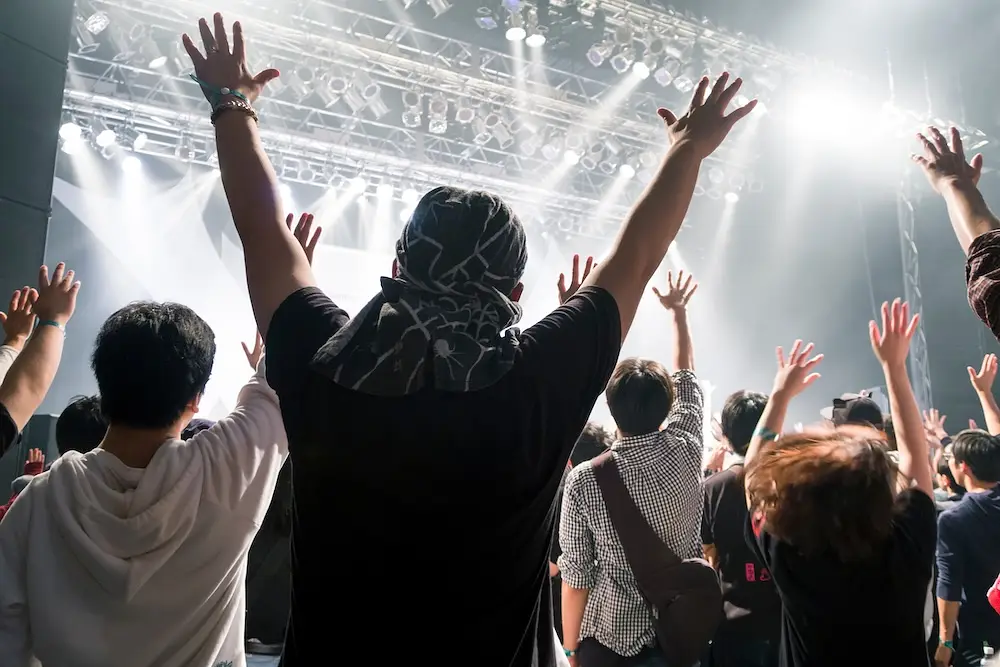
Your backstage pass to Japan
Venue: Nationwide: Tokyo, Osaka, Niigata, Hokkaido, Yokohama, Chiba
When: Mainly May to September, depending on the festival
Sushi, cosmetics, trains, and emotional vending machines are just a few of the many things that Japan does so masterfully. However, one thing that people continue to undervalue? its scene at the festival. There is more to a Japanese music festival than merely the program. It's about mist-covered mountain stages, midnight ramen following a big-name performance, immaculate restrooms at two in the morning, and folks so polite you'll momentarily question whether you've unintentionally entered heaven. This cheat sheet will help you choose the greatest music festivals in Japan based on your personality, financial situation, level of endurance, and emotional connection to portable chargers.

Japan Music Festivals 2026 Key Details
Dates |
July 24–26 |
Opening Hours |
Gates typically open from morning until late night performances |
Location |
Naeba Ski Resort, Niigata |
Admission |
Paid tickets only; prices vary by 1-day, weekend, and camping passes |
Official Website |
|
Nearest Station |
Echigo-Yuzawa Station (JR Joetsu Shinkansen) + shuttle bus |
Organizer |
Smash Corporation |
Summer Sonic 2026 Key Details
Details |
Information |
Dates |
August 14–16, 2026 |
Opening Hours |
Around 11:00 AM – late evening |
Location |
Tokyo (ZOZO Marine Stadium & Makuhari Messe, Chiba) and Osaka venues simultaneously |
Admission |
Paid tickets only; 1-day and multi-day passes available |
Official Website |
|
Nearest Station |
Kaihin-Makuhari Station (JR Keiyo Line) for Tokyo venue |
Organizer |
Creativeman Productions |
Vibe |
Mainstream, international, stadium-style |
Best For |
First-time Japan festival travellers |
Sonicmania 2026 Key Details
Details |
Information |
Dates |
Mid-August 2026 (typically the night before Summer Sonic) |
Opening Hours |
Evening until early morning |
Location |
Makuhari Messe, Chiba |
Admission |
Paid tickets only |
Official Website |
|
Nearest Station |
Kaihin-Makuhari Station (JR Keiyo Line) |
Organizer |
Creativeman Productions |
Vibe |
Electronic, late-night festival energy |
Best For |
EDM fans and night owls |
Rock in Japan Festival 2026 Key Details
Details |
Information |
Dates |
Early September 2026 |
Opening Hours |
Around 10:00 AM – late evening |
Location |
Soga Sports Park, Chiba |
Admission |
Paid tickets only |
Official Website |
|
Nearest Station |
Soga Station (JR Keiyo Line / Uchibo Line / Sotobo Line) |
Organizer |
Rockin' On Japan |
Vibe |
Japanese artists only, energetic and local-focused |
Best For |
J-pop and J-rock fans |
What to Expect at a Japan Music Festival
Expect excellent management, polite crowds, delicious cuisine, and music aficionados who manage to dance all night without causing havoc.
At major festivals like Fuji Rock Festival and Summer Sonic, you’ll find:
Multiple stages with international and Japanese artists
Food stalls selling ramen, curry, takoyaki, and festival snacks
Merchandise zones and pop-up shops
Chill-out areas, bars, and rest spaces
Surprisingly clean toilets and orderly queues
Every festival has its own personality:
Fuji Rock = mountains, camping, indie energy
Summer Sonic = big international acts and stadium atmosphere
Ultra Japan = lasers, EDM, and party fashion
GREENROOM Festival = beach culture and relaxed vibes
Rock in Japan Festival = local music fans and Japanese artists
Who Is a Japan Music Festival For?
Japan music festivals are suitable for practically any style of visitor; it simply depends on if your ideal trip includes mountain camping, neon EDM, or passionate singing in a stadium full of strangers.
Especially great for:
Solo travelers looking for atmosphere and easy social energy
Couples planning a fun summer trip
J-pop and anime fans discovering Japanese artists
Foodies who treat festival snacks like a competitive sport
EDM lovers, indie fans, and rock fans
First-time Japan visitors wanting something beyond temples and shopping
Tourist-friendliness varies by festival:
Summer Sonic, Ultra Japan, and Fuji Rock Festival are the easiest for international visitors, with better English signage and overseas ticket support.
Rock in Japan Festival and Rising Sun Rock Festival feel more local, but that’s part of the charm.
Pro Tips
Arrive early for major festivals like Fuji Rock and Summer Sonic, queues build fast by midday.
Bring cash, even if cards are accepted in some areas.
Carry a power bank because festival apps, maps, and photos will destroy your battery.
Download train apps before arriving in Japan.
Stay near train stations for easier late-night returns.
At Fuji Rock, pack for mud and rain even if the forecast looks perfect.
Use lockers whenever possible instead of carrying everything all day.
Accessibility is generally good at larger festivals, especially Summer Sonic and Ultra Japan, but mountain venues like Fuji Rock can be more physically demanding.
What to Wear at a Japan Music Festival
For the Fuji Rock Festival, so waterproof shoes, layers, and a rain jacket. The mountains are beautiful but emotionally unpredictable.
For Summer Sonic and Ultra Japan, wear breathable clothes, sunglasses, and comfortable sneakers, August humidity in Japan is not a joke.
For the GREENROOM Festival, relaxed beach-style outfits work perfectly.
For all festivals:
Comfortable shoes matter more than fashion
Bring a small towel
Pack light during hot summer events
Avoid giant bags during crowded headline sets
How to Get to Japan Music Festivals
Fuji Rock Festival
Take the Joetsu Shinkansen from Tokyo Station to Echigo-Yuzawa Station, then use the official shuttle bus to Naeba Ski Resort.
Summer Sonic Tokyo
Take the JR Keiyo Line to Kaihin-Makuhari Station. From there, walk to Makuhari Messe and ZOZO Marine Stadium.
Summer Sonic Osaka
Use local trains to reach the Osaka festival venue. Check the official Summer Sonic site for the latest station and shuttle details.
Ultra Japan
Travel to Odaiba in Tokyo using the Yurikamome Line or Rinkai Line, then follow event signage to the venue.
GREENROOM Festival
Take the Minatomirai Line to Bashamichi Station or Nihon-odori Station for Yokohama Red Brick Warehouse.
Rising Sun Rock Festival
Travel to Sapporo, then use the official festival shuttle or bus access to the Ishikari Bay venue.
For multi-city festival trips, compare a JR Pass or Regional Pass before booking trains.
Nearby Recommendations
Food & Drinks
Try Niigata ramen, curry, and onsen-town restaurants in Echigo-Yuzawa, close to Fuji Rock. Around Summer Sonic and Ultra Japan, you can anticipate everything from izakaya and sushi to late-night ramen and café culture.
Attractions & Sightseeing
Combine Fuji Rock with mountain onsen stays, Summer Sonic with Tokyo or Osaka nightlife, and the GREENROOM Festival with Yokohama's waterfront, Chinatown, and Minato Mirai neighborhood.
Hotels & Ryokans
Book your accommodations early because festival weekends sell out quickly. JapanDen is an excellent resource for comparing hotels around Tokyo, Osaka, Yokohama, Chiba, Niigata, and Sapporo before costs increase.
More About Japan Music Festivals
Japan's current festival culture exploded in the late 1990s with the establishment of Fuji Rock Festival, which is now regarded as the country's most renowned outdoor music event. Today, prominent festivals such as Summer Sonic, Ultra Japan, and Rock in Japan attract hundreds of thousands of tourists each year.
One characteristic that distinguishes Japanese festivals? The crowd. Even large events are remarkably clean, well-organized, and respectful in comparison to many Western festivals.
Fun facts:
Fuji Rock Festival isn’t actually near Mt Fuji anymore, it moved to Niigata after its first edition.
Rising Sun Rock Festival is Japan’s major all-night outdoor festival.
Summer Sonic regularly books major global artists while running simultaneously in Tokyo and Osaka.
GREENROOM Festival mixes surf culture, music, and art in Yokohama’s historic Red Brick Warehouse area.
Planning Your Visit
If you're considering a vacation to Japan for a music festival, book your accommodations as soon as possible, especially during the weekends of Fuji Rock, Summer Sonic, and Rising Sun Rock Festival. Hotels near major stadiums sell out rapidly, and costs skyrocket once lineups are revealed. The JapanDen hotel guides are handy for comparing stays in Tokyo, Osaka, Yokohama, Niigata, Chiba, and Sapporo.
A JR Pass or Regional Pass can save you money if you're visiting numerous cities and festivals in one trip. Shinkansen travel is particularly well-suited to festivals such as Fuji Rock.
Stay connected with Pocket Wi-Fi to access train timetables, ticket apps, maps, and lineup updates. SIM cards are also available as an add-on when purchasing JR or Regional Passes at the checkout.
If it’s your first time arriving in Japan during festival season, a Meet & Greet service can make airport transfers and train connections much less stressful.
A few Japan basics:
Carry some cash for food stalls and smaller vendors
Credit cards are widely accepted at larger festivals, but not everywhere
Be respectful in crowds and follow staff instructions
Clean up after yourself, Japanese festival culture takes pride in staying organized and tidy
FAQs About Japan Music Festivals
Q. Do I need a ticket for Japan music festivals?
Yes. Major festivals like Fuji Rock, Summer Sonic, and Ultra Japan require advance tickets, and popular dates can sell out quickly.
Q. Are Japan music festivals kid-friendly?
Some are. Festivals like GREENROOM and Summer Sonic are more family-friendly during the daytime, while all-night events like Rising Sun are better for adults.
Q. Is there shelter from the rain?
Indoor festivals like Summer Sonic have covered areas, but outdoor festivals like Fuji Rock can get very wet, so bring rain gear.
People Also Ask
What is the biggest music festival in Japan?
Fuji Rock Festival is widely considered Japan’s biggest and most famous outdoor music festival.
Which Japanese music festival is best for foreigners?
Summer Sonic is usually the easiest for international visitors thanks to city access, English support, and global artists.
What should I bring to a Japanese music festival?
Comfortable shoes, cash, a portable charger, water, sunscreen, and a small towel are essential.