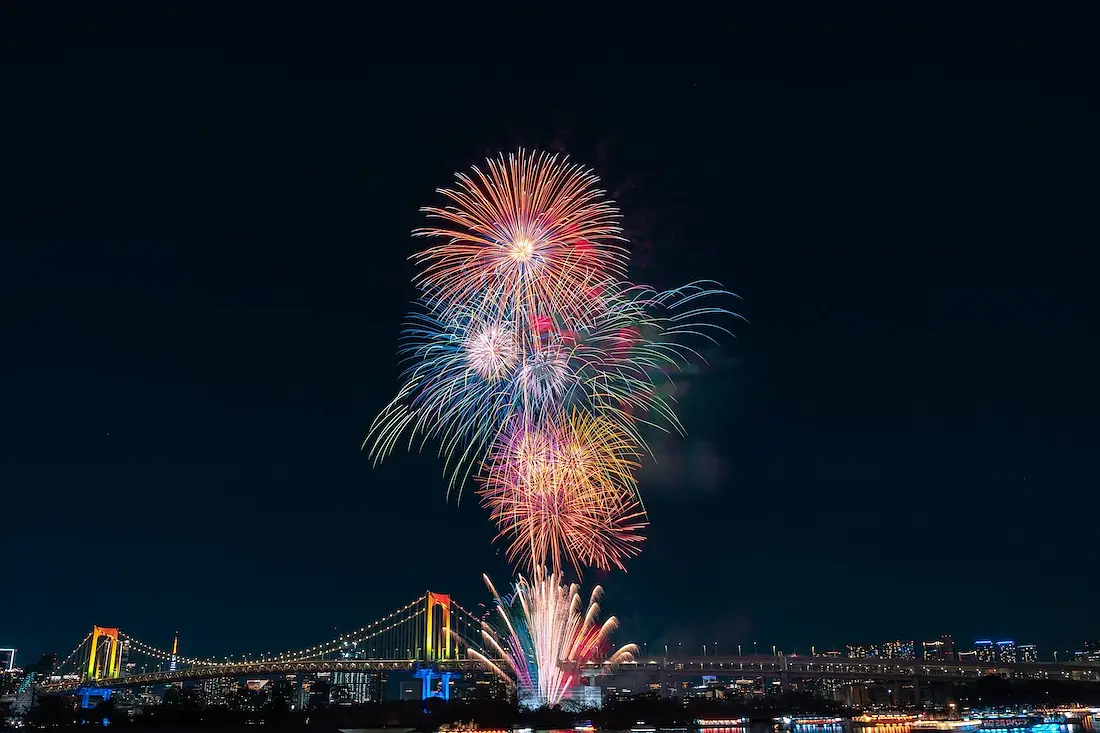
Summer, But Make It Sparkle
Venue: Nationwide, including Tokyo, Niigata, Akita, Shiga, Osaka, Ibaraki, and Nagano
When: Mostly July and August, with some major events in spring, autumn, and early summer
A Japanese fireworks display is more than just “look, pretty lights.” This is summer theatre. It’s yukata, riverbanks, shaved ice, cold drinks, dramatic crowds, and brilliantly planned fireworks that make the word “spectacular” feel not enough.
Japanese fireworks festivals, also known as hanabi taikai, are among Japan’s most memorable seasonal experiences. They have roots in Edo-period river celebrations and now keep that lovely blend of memory, joy, community, and pure spectacle. If you’re planning a summer trip, this guide will help you choose the best Japan fireworks festivals, from Tokyo classics to once-in-a-lifetime regional displays.
Best Japan Fireworks Festivals
Japan has hundreds of fireworks events every year, but a few stand out because of their history, scale, artistry, access, or atmosphere. These are some of the best festivals for travellers to experience, especially if you are building a summer or multi-city itinerary around fireworks.
Exact dates, seating rules, and crowd-control routes can change each year, so always check the official festival website before travelling. If you are crossing regions for fireworks, compare train tickets, a JR Pass, or a Regional Pass early, because hotels and trains can fill quickly around major hanabi weekends.
1. Sumida River Fireworks Festival
The Sumida River Fireworks Festival is Tokyo’s classic summer fireworks event, with roots in Edo-period river fireworks around the old Ryogoku area. Today, it is usually held along the Sumida River near Asakusa and the Tokyo Skytree area, which makes it one of the easiest major fireworks festivals for first-time visitors to add to a Tokyo itinerary.
What makes Sumida special is not just the number of fireworks. It is the setting: old Tokyo streets, riverside crowds, yukata, food stalls, and the Tokyo Skytree glowing in the background. It is crowded, yes, but it is also one of the most recognisable hanabi nights in the city.
How To Get To Sumida River Fireworks Festival
Use Asakusa Station, Kuramae Station, Tokyo Skytree Station, or nearby stations depending on your chosen viewing area. Expect crowd controls, road closures, and one-way walking routes. Do not assume you can move freely along the river once the area gets packed.
If you are staying outside Tokyo or combining this with a wider Japan itinerary, check train tickets before deciding where to stay. For a Tokyo-only evening, local train and subway tickets are usually enough, but a JR Pass or Regional Pass may be useful if Sumida is part of a longer multi-city route.
Nearby Recommendations
Pair Sumida with Asakusa, Senso-ji Temple, Nakamise Shopping Street, or the Tokyo Skytree area. If you want dinner nearby, book early or eat well before the show, as restaurants and convenience stores can get crowded.
Details |
Information |
|---|---|
Usual Timing |
Last Saturday in July |
Typical Opening Hours |
Around 7:00 PM to 8:30 PM |
Location |
Sumida River, Asakusa / Tokyo Skytree area, Tokyo |
Admission |
Free viewing areas / Paid reserved seating may be available |
Official Website |
|
Nearest Station |
Asakusa Station, Kuramae Station, Tokyo Skytree Station, or nearby stations depending on viewing area |
Organizer |
Sumida City and Taito City committees |
2. Adachi Fireworks Festival
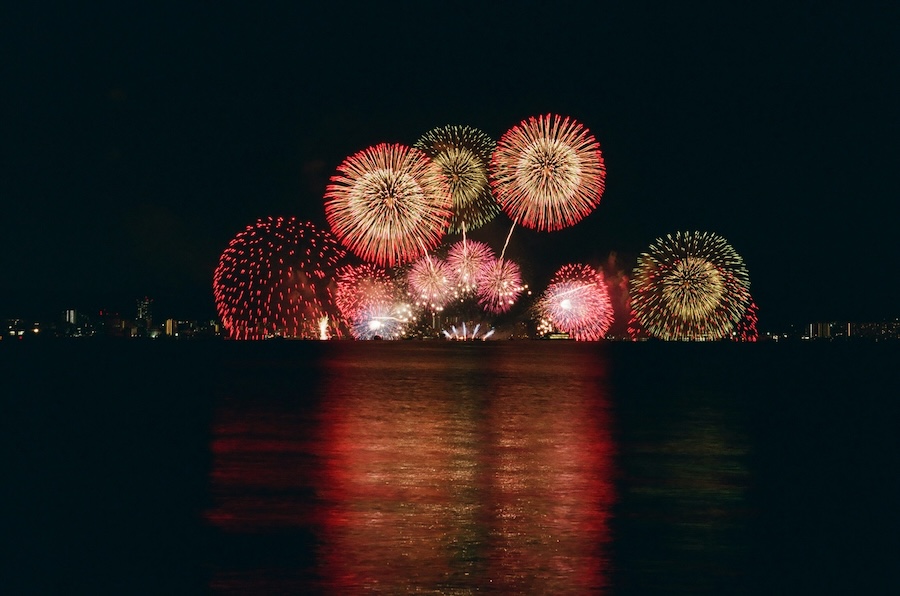
Adachi Fireworks Festival is one of Tokyo’s most energetic early-season fireworks displays. Traditionally associated with the start of Tokyo’s summer fireworks season, it has recently shifted toward a late-May schedule to reduce risks linked to extreme heat and summer storms.
Its biggest strength is intensity. Instead of stretching the show out gently, Adachi is known for launching around 13,000 fireworks in about one hour along the Arakawa River. That gives the event a fast, concentrated rhythm, the kind where you barely have time to lower your camera before the next burst hits the sky.
How To Get To Adachi Fireworks Festival
The viewing areas are spread along the Arakawa River, so the best station depends on which side of the river you plan to use. Kita-Senju is convenient but can become extremely crowded, while the Nishi-Arai side may offer more space depending on the year’s crowd-control plan.
If you are travelling into Tokyo from another region, check train tickets first and then plan your local route separately. A JR Pass or Regional Pass may help if Adachi is part of a larger Tokyo and Tohoku or Tokyo and Kansai itinerary, but local travel inside Tokyo is usually handled by regular train and subway tickets.
Nearby Recommendations
Pair Adachi with Kita-Senju, a lively local area with casual restaurants, izakayas, shopping streets, and a less polished but very enjoyable Tokyo atmosphere. If you want a quieter evening, eat before arriving and focus on securing a comfortable viewing spot along the river.
Details |
Information |
|---|---|
Usual Timing |
Late May under the current schedule |
Typical Opening Hours |
Around 7:20 PM to 8:20 PM |
Location |
Arakawa River riverbank, Adachi City, Tokyo |
Admission |
Free viewing areas / Paid areas may vary by year |
Official Website |
|
Nearest Station |
Kita-Senju Station, Kosuge Station, Gotanno Station, Umejima Station, or Nishi-Arai Station depending on viewing side |
Organizer |
Adachi Tourism and Exchange Association / local committees |
3. Nagaoka Fireworks Festival
The Nagaoka Fireworks Festival is one of Japan’s most powerful regional fireworks experiences. Held every year on August 2 and 3 along the Shinano River in Niigata Prefecture, it is closely tied to remembrance, recovery, and peace.
Its signature Phoenix fireworks are the heart of the event: wide, emotional, and designed to feel bigger than a normal fireworks finale. Nagaoka is not just a “big fireworks show.” It is a festival with a memory behind it, which is why many visitors describe the atmosphere as moving rather than simply impressive.
How To Get To Nagaoka Fireworks Festival
Take the Joetsu Shinkansen to Nagaoka Station, then follow official walking routes or shuttle guidance to the riverbank viewing areas. If you are returning the same night, check train schedules and crowd-control guidance in advance, as post-finale station crowds can be intense.
Because Nagaoka is a Shinkansen-accessible regional event, this is one of the places where comparing train tickets, a JR Pass, or a Regional Pass can genuinely affect your planning. If you are travelling Tokyo to Nagaoka and then continuing elsewhere, check the rail cost before booking hotels.
Nearby Recommendations
Pair Nagaoka with Niigata food, sake, rice-based dishes, and a slower regional stay if your schedule allows. Staying overnight in or near Nagaoka is much easier than trying to rush back after the finale.
Details |
Information |
|---|---|
Usual Timing |
August 2 and 3 every year |
Typical Opening Hours |
Around 7:20 PM to 9:10 PM or later |
Location |
Shinano River riverbank, Nagaoka, Niigata |
Admission |
Free viewing areas / Paid reserved seating available |
Official Website |
|
Nearest Station |
Nagaoka Station, JR Joetsu Shinkansen |
Organizer |
Nagaoka Festival Committee |
4. Omagari Fireworks Competition
Omagari Hanabi, officially the National Fireworks Competition, is one of Japan’s most respected fireworks competitions. Held in Daisen City, Akita Prefecture, it brings together leading fireworks artists from across Japan and is known for both daytime and evening fireworks.
Unlike a standard festival display, Omagari is about craft. Pyrotechnicians compete on design, colour, rhythm, and technical skill, so the atmosphere feels a little like an open-air championship under the night sky. It is a strong choice if you want to see fireworks as art, not just as a summer spectacle.
How To Get To Omagari Fireworks Competition
Take the Akita Shinkansen to Omagari Station, then walk or follow official event transport instructions to the viewing area. This is a major regional event, so book accommodation and return transport as early as possible.
For travellers coming from Tokyo or combining Akita with other Tohoku stops, compare train tickets, the JR Pass, and relevant Regional Pass options before deciding your route. Omagari is not the kind of event you want to improvise on the day.
Nearby Recommendations
Pair Omagari with Akita food and culture, including kiritanpo, local sake, and a longer Tohoku itinerary if you have time. If the festival is the main reason for your trip, stay nearby rather than treating it as a casual day trip.
Details |
Information |
|---|---|
Usual Timing |
Late August, usually on a Saturday |
Typical Opening Hours |
Daytime fireworks from afternoon / Night fireworks from evening |
Location |
Omono River riverbank, Daisen City, Akita |
Admission |
Paid reserved seating is common / Some free or open areas may vary by year |
Official Website |
|
Nearest Station |
Omagari Station, JR Akita Shinkansen |
Organizer |
Omagari Hanabi Steering Committee / Omagari Chamber of Commerce and Industry |
5. Lake Biwa Great Fireworks Festival
Lake Biwa Great Fireworks Festival is one of Kansai’s most popular summer fireworks options and a favourite for travellers based in Kyoto or Osaka who want a big display without going all the way to Niigata or Akita. The event takes place around Otsu Port, with fireworks reflected over Japan’s largest lake.
Its setting is what makes it memorable. Instead of city buildings or a narrow riverbank, you get open water, lake reflections, and a wide evening sky. It is still crowded, but the mood feels different from Tokyo fireworks: more lakeside, more open, and very easy to combine with a Kyoto or Shiga itinerary.
How To Get To Lake Biwa Great Fireworks Festival
From Kyoto, take the JR Biwako Line to Otsu Station, then walk toward the lakeside viewing areas, or use Keihan services to Biwako-Hamaotsu Station depending on your route. Roads and trains become crowded, so arrive early and avoid planning a tight connection afterward.
If you are staying in Kyoto or Osaka, this is a natural place to link to train tickets because the route is short but still needs planning on fireworks day. A Regional Pass may also make sense if you are combining Otsu with wider Kansai travel.
Nearby Recommendations
Pair Lake Biwa fireworks with Otsu Port, lakeside walks, or a longer Shiga day. If you have more time, consider Miidera Temple, the Lake Biwa Canal area, or a simple lakeside dinner before the crowds peak.
Details |
Information |
|---|---|
Usual Timing |
Early August |
Typical Opening Hours |
Around 7:30 PM to 8:30 PM |
Location |
Lake Biwa shores around Otsu Port, Otsu, Shiga Prefecture |
Admission |
Free viewing areas / Paid reserved seating available |
Official Website |
|
Nearest Station |
Biwako-Hamaotsu Station or JR Otsu Station |
Organizer |
Lake Biwa Great Fireworks Festival Executive Committee |
6. Tsuchiura All Japan Fireworks Competition
The Tsuchiura All Japan Fireworks Competition is one of Japan’s most important fireworks competitions and a major autumn hanabi event. Unlike many summer fireworks festivals, Tsuchiura is usually held on the first Saturday of November along the Sakuragawa riverside in Ibaraki Prefecture, making it a strong choice for travellers visiting Japan outside peak summer.
The competition first began in 1925 and later developed into a national stage for fireworks manufacturers and pyrotechnicians to show their skills. What makes Tsuchiura special is the competition format: fireworks are judged across categories such as starmines, size 10 shells, and original displays. It feels less like a simple festival finale and more like watching Japan’s fireworks artists compete in the open sky.
How To Get To Tsuchiura All Japan Fireworks Competition
Take the JR Joban Line to Tsuchiura Station, then follow the official event routes toward the Sakuragawa riverside around the Gakuen-ohashi area. From Tsuchiura Station, the venue is usually around 30 minutes on foot from the West Exit, or around 10 minutes by shuttle bus from the East Exit when shuttle services are operating.
If you are travelling from Tokyo, Tsuchiura is a manageable rail trip, but fireworks day crowds can make the return journey slower than expected. Check train tickets in advance, and if Tsuchiura is part of a wider Japan itinerary, compare whether a JR Pass or Regional Pass makes sense for your route.
Nearby Recommendations
Pair Tsuchiura with a slower Ibaraki day if your schedule allows. Before the fireworks, you can explore the area around Tsuchiura Station, visit local cafés or shops, or combine the trip with nearby Ibaraki attractions such as Lake Kasumigaura. If you are returning to Tokyo the same night, keep the plan simple and avoid adding too many extra stops after the show.
Details |
Information |
|---|---|
Usual Timing |
First Saturday of November |
Typical Opening Hours |
Around 6:00 PM to 8:30 PM |
Location |
Sakuragawa riverside, Gakuen-ohashi area, Tsuchiura, Ibaraki |
Admission |
Free viewing areas / Paid reserved seating may be available |
Official Website |
|
Nearest Station |
Tsuchiura Station, JR Joban Line |
Organizer |
Tsuchiura All Japan Fireworks Competition Committee / Tsuchiura City |
What To Expect At A Japan Fireworks Festival
A Japan fireworks festival is part performance, part picnic, part crowd-management challenge, and part summer dream. Expect people, romance, food stalls, yukata, folding fans, riverbanks, and one of the most exquisite displays of controlled chaos you’ll ever see.
The first thing to understand is scale. Major hanabi taikai are not casual five-minute displays. Many last around an hour or more, with carefully timed sequences, themed fireworks, pauses, announcements, and finales designed to build emotion. At famous regional events like Nagaoka or Omagari, people often travel specifically for the fireworks rather than treating them as a side activity.
The second thing to expect is crowds. Big-city events such as Sumida and Adachi can bring heavy congestion around stations, bridges, and riverbanks, while regional events such as Nagaoka, Omagari, and Lake Biwa can overwhelm hotels and trains in otherwise manageable towns. The fireworks may feel effortless from your picnic mat, but the logistics behind them are not casual.
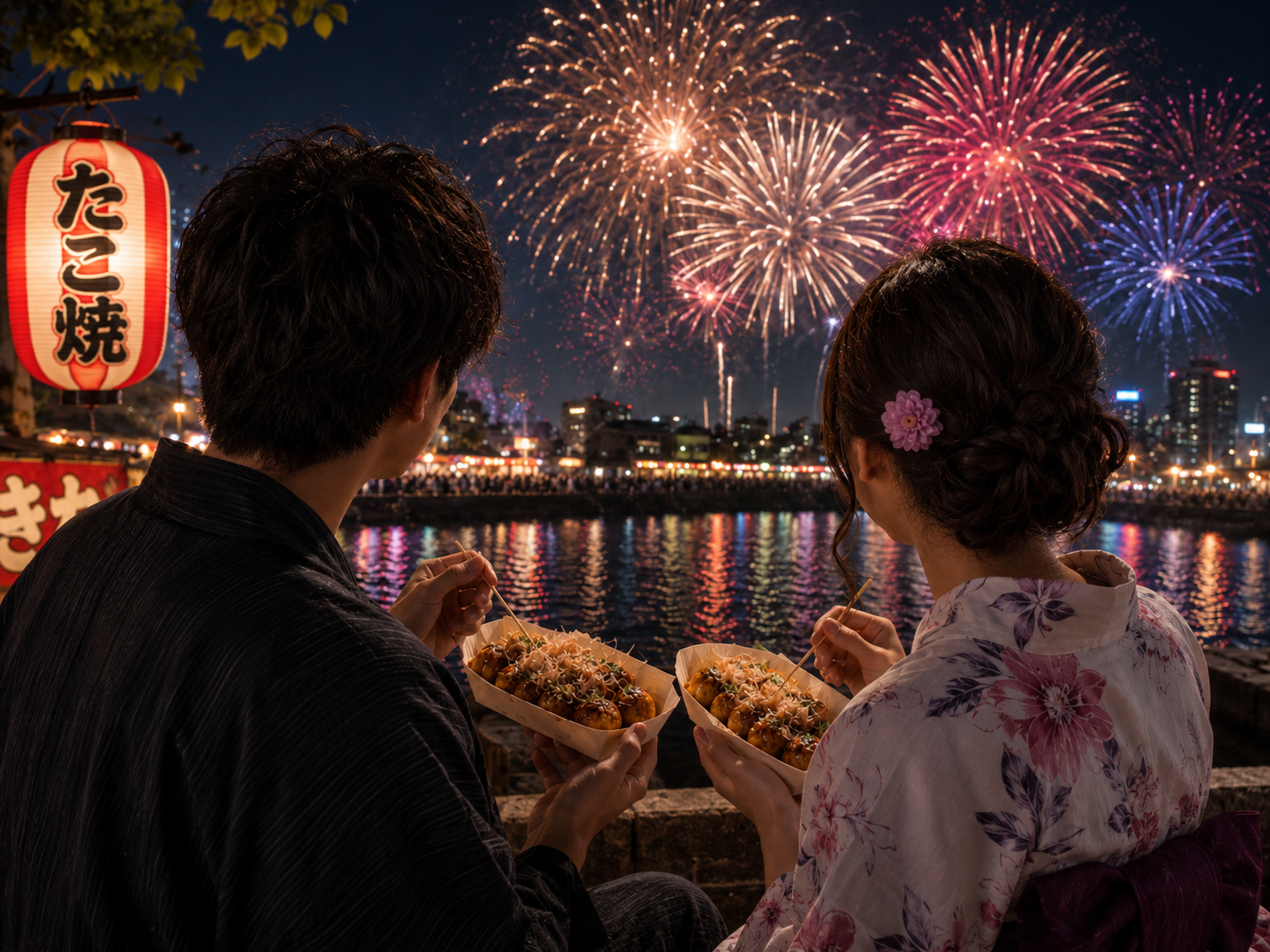
Food is part of the experience too. At many festivals, you’ll find classic summer stall food such as yakisoba, takoyaki, karaage, grilled corn, kakigori, dango, and cold drinks. Even when food stalls are limited, convenience stores and local shops nearby become part of the ritual. Buy early, carry cash, and do not assume you can quickly grab dinner five minutes before launch time.
The atmosphere is one of the best parts. Couples arrive in yukata, families spread picnic sheets, photographers set up tripods where permitted, and groups of friends treat the evening like a seasonal reunion. Some festivals feel romantic and polished. Others feel loud, local, sweaty, and chaotic in the best possible way.
Weather is the one thing nobody controls. Light rain may not always stop a display, but strong wind, lightning, storms, or unsafe river conditions can lead to delays or cancellation. Always check the official website on the day and keep your plan flexible, especially if you are travelling long-distance for one specific event.
Who Is A Japan Fireworks Festival For?
A Japan fireworks festival works for almost anyone who wants a classic summer night in Japan. The experience can be romantic, family-friendly, social, chaotic, or surprisingly emotional depending on the event and where you watch from.
A Japan fireworks festival is perfect for:
Couples wanting a romantic summer night
Families looking for a classic cultural experience
Solo travellers who want atmosphere without needing a complicated plan
Photographers chasing dramatic night shots
Foodies who believe yakisoba tastes better under fireworks
First-time visitors planning a summer Japan itinerary
Rail travellers building a multi-city route around Tokyo, Niigata, Akita, Shiga, Osaka, or Ibaraki
Most major fireworks events welcome visitors, but English support varies. Tokyo and Osaka events are usually easier for first-time travellers, while regional festivals may require more planning, earlier accommodation booking, and translation apps.
Pro Tips
A little planning makes the difference between a magical hanabi night and a very sweaty evening stuck in a station crowd. Fireworks festivals are beautiful, but they are also some of Japan’s busiest summer events.
Arrive 4 to 6 hours early for major festivals like Sumida River, Nagaoka, and Omagari if you want a decent free viewing spot.
Bring a picnic mat if the venue allows ground seating.
Consider paid reserved seats for the biggest events, especially if you are travelling with children or older relatives.
Carry cash for food stalls and small purchases.
Bring water, a fan, a towel, and a power bank.
Expect huge return-train crowds after the finale.
Leave slightly before the end if you truly hate packed stations.
Book hotels early, as fireworks weekends can sell out fast.
Check the official event website on the day, especially if rain, wind, or storms are possible.
What To Wear At A Japan Fireworks Festival
The ideal clothing is a yukata, a lightweight summer kimono commonly worn at fireworks displays. You can rent one in tourist areas such as Asakusa, Kyoto, or Osaka, and many rental shops provide dressing assistance.
If you wear a yukata, choose comfortable sandals and don’t walk too quickly. Elegance, dear, has a speed limit.
If you’re not wearing a yukata, choose breathable summer clothing, comfortable shoes, and something you don’t mind sitting on, such as a picnic mat. Summer evenings can still be hot and humid, so comfort matters more than looking perfect.
More About Japan Fireworks Festivals
Fireworks became popular in Japan during the Edo period, particularly around river festivals and summer gatherings. Today, they still feel truly seasonal: an opportunity to mark summer, remember the past, and connect with friends, family, and strangers under the same sky.
The word hanabi means “fire flowers,” which is exactly right. Dramatic, beautiful, and over in seconds, just like the best summer romances.
Japan’s biggest fireworks festivals are not just about quantity. They are about rhythm, timing, colour, sound, and the emotional build-up of the night. The best displays feel choreographed rather than random, with pauses, crescendos, and finales that make the whole crowd react together.
Planning Your Visit
A fireworks festival is easy to enjoy once you are there, but it is not always easy to improvise. Hotels, trains, viewing areas, and food stalls all become busier than usual, especially for famous events.
Start with the event location, not just the festival name. Sumida and Adachi are both Tokyo events, but they use different rivers, different stations, and different crowd-control routes. Nagaoka and Omagari are Shinkansen-accessible, but they require early accommodation planning. Lake Biwa is easy from Kyoto on paper, but on fireworks night, that short route becomes much busier than usual.
Accommodation should be booked as soon as your festival plans are firm. Compare places to stay near major fireworks areas such as Asakusa, Kita-Senju, Nagaoka, Akita, Otsu, Kyoto, and Osaka before fireworks-season prices jump. For regional events, staying close to the venue is often worth more than saving a little money farther away.
Transport deserves the same attention. If you are staying local, individual train tickets or an IC card may be enough. If you are using fireworks as part of a multi-city summer route, compare train tickets, a JR Pass, and Regional Pass options before you commit. Tokyo plus Niigata, Akita, Kansai, or Shiga can change the rail maths quickly.
Connectivity also matters more than usual during festival nights. Pocket Wi-Fi, a SIM card, or an eSIM helps with maps, train alerts, weather updates, translation, and last-minute official notices. This is especially useful when stations change exits, walking routes become one-way, or your group gets separated in the crowd.
If this is your first trip to Japan, a Meet & Greet service can help with airport arrival, train connections, and basic orientation before festival season throws you into a riverside crowd. It will not make the fireworks less busy, but it can make the first part of the trip much smoother.
FAQs About Fireworks Festivals In Japan
Q: When Is Fireworks Season In Japan?
A: Fireworks season in Japan is mainly July and August, although some major events are held in spring, autumn, or early summer.
Q: What Are The Best Fireworks Festivals In Japan?
A: Nagaoka, Omagari, and Tsuchiura are often called Japan’s Big Three fireworks festivals. Sumida River, Adachi, Lake Biwa, Edogawa, Jingu Gaien, and Tenjin Matsuri are also popular choices.
Q: Do I Need A Ticket For Japan Fireworks Festivals?
A: Many fireworks festivals have free viewing areas, but major events often offer paid reserved seating. For famous festivals, paid seats can be worth it if you want a clearer view and less stress.
Q: Are Japan Fireworks Festivals Kid-Friendly?
A: Yes, but crowds can be intense. Families should arrive early, choose less crowded viewing areas, bring water and snacks, and avoid trying to leave at the busiest moment right after the finale.
Q: What Should I Wear To A Japan Fireworks Festival?
A: A yukata is the classic choice, but breathable summer clothes and comfortable shoes are also fine. Bring a fan, towel, and something to sit on if you plan to wait for a long time.
Q: Can I Bring Food And Drinks To A Fireworks Festival In Japan?
A: Usually yes, but rules vary by venue. Many festivals also have food stalls selling yakisoba, takoyaki, karaage, kakigori, grilled corn, and drinks.
Q: What Happens If It Rains?
A: Light rain may not always cancel a festival, but strong wind, storms, or unsafe conditions can lead to postponement or cancellation. Always check the official website on the day.
Q: What Is The Biggest Fireworks Festival In Japan?
A: There is no single official “biggest” in every category. Nagaoka is one of the largest and most famous by scale, Omagari is one of the most prestigious by competition quality, and Sumida is one of Tokyo’s most iconic.
Q: What Is The Best Fireworks Festival Near Tokyo?
A: Sumida River is the classic Tokyo choice, while Adachi and Edogawa are also popular. Tsuchiura in Ibaraki is a strong option for travellers willing to go outside central Tokyo.
Q: How Early Should I Arrive For A Japan Fireworks Festival?
A: For major festivals, arrive several hours early if you want a good free viewing spot. For very famous events such as Sumida, Nagaoka, and Omagari, 4 to 6 hours early is not unusual.