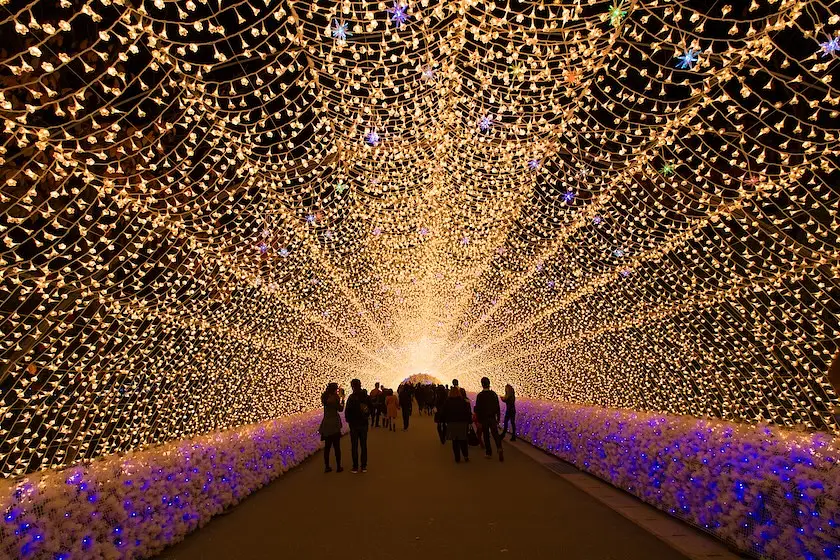
Experience the Sparkle Season in Japan
If you’re looking for the best Christmas lights in Japan, you’ve come to the right place. Welcome to your insider guide to Japan’s winter illuminations, where city streets, gardens, parks, waterfronts, and even racecourses are transformed into glowing seasonal worlds.
In Japan, “illumination” usually means a large-scale winter light display, and it is not always limited to Christmas. Many events begin in November and continue into January, February, or even spring. That means you can still enjoy light tunnels, golden trees, sparkling cityscapes, and plenty of “wow” moments long after December 25.
Use this guide as a planning tool: bookmark it, dream about it, and let it help shape your winter trip. Whether you’re travelling with family, friends, or someone special, Japan’s Christmas lights and winter illuminations are one of the easiest ways to add a little sparkle to your itinerary.
Best Christmas Lights and Winter Illuminations in Japan
Japan has hundreds of winter illuminations, but a few stand out for their scale, creativity, atmosphere, and ease of access. These long-running events return regularly and have become part of Japan’s winter calendar, making them safer choices for evergreen trip planning.
Most winter illuminations in Japan begin around sunset, usually between 4:00 PM and 5:30 PM. City-center displays often stay lit until around 10:00 PM or 11:00 PM, while ticketed gardens and park-style events may close earlier, often around 8:30 PM or 9:00 PM.
Always check the official event website before visiting, as dates, opening hours, ticket prices, and rest days can change from season to season.
Yokohama Milight
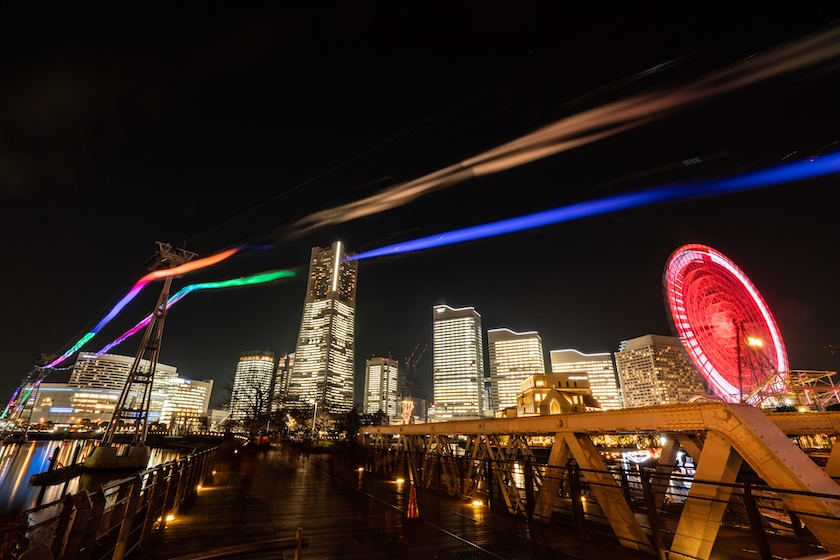
Yokohama Milight is one of the Tokyo area’s most elegant winter illumination events. Held around the Minato Mirai waterfront, it lights up streets, office buildings, trees, and pedestrian spaces with a polished city glow.
This is a great choice if you want an easy evening trip from Tokyo without committing to a full-day excursion. The route is walkable, free to enjoy, and especially beautiful around the waterfront after dark.
Detail |
Info |
|---|---|
Usual Season |
Early November to early February |
Typical Hours |
Late afternoon to late evening |
Location |
Minato Mirai 21 District, Yokohama, Kanagawa Prefecture |
Admission |
Free |
Nearest Stations |
Yokohama Station, Shin-Takashima Station, Minatomirai Station |
Best For |
Couples, photographers, easy evening walks from Tokyo |
Marunouchi Illumination
Marunouchi Illumination is one of Tokyo’s classic winter light walks. The tree-lined streets near Tokyo Station glow with champagne-gold lights, creating a polished, city-center display that is easy to add before or after dinner.
This is one of the easiest illuminations for first-time visitors because it is central, free, and simple to reach. It also pairs naturally with Tokyo Station, the Imperial Palace area, and nearby shopping streets.
Detail |
Info |
|---|---|
Usual Season |
Mid-November to mid-February |
Typical Hours |
Late afternoon to late evening |
Location |
Marunouchi area, near Tokyo Station |
Admission |
Free |
Nearest Station |
Tokyo Station |
Best For |
First-time visitors, city walks, dinner plans, photography |
Tokyo Mega Illumination
Tokyo Mega Illumination turns Oi Racecourse into a large-scale light attraction with fountains, projection mapping, illuminated paths, and horse-racing-inspired displays. It is one of Tokyo’s major ticketed illumination events and feels very different from the free street lights in Shibuya, Marunouchi, or Roppongi.
This is a good option if you want a complete evening event rather than a quick walk through city lights. Just check the operating calendar before visiting, as the event usually runs only on selected days during the winter season.
Detail |
Info |
|---|---|
Usual Season |
Early winter to early January |
Typical Hours |
Late afternoon to evening |
Location |
Oi Racecourse, Shinagawa Ward, Tokyo |
Admission |
Ticketed entry |
Nearest Station |
Oi Keibajo-mae Station, Tokyo Monorail |
Best For |
Families, couples, full evening plans, Tokyo-based travellers |
Osaka Festival of the Lights
Osaka Festival of the Lights is one of Kansai’s most established winter illumination programs. Its best-known element is Midosuji Illumination, which lights up the broad boulevard running through central Osaka.
This is a strong choice if you want an urban light experience rather than a garden or theme-park-style event. Pair it with dinner in Namba or a walk toward Dotonbori, and the whole city feels like part of the show.
Detail |
Info |
|---|---|
Usual Season |
Early November to late December or January, depending on the program |
Typical Hours |
Evening to late evening |
Location |
Midosuji Boulevard and central Osaka areas |
Admission |
Free for street illuminations |
Nearest Stations |
Umeda, Yodoyabashi, Hommachi, Shinsaibashi, Namba |
Best For |
City lights, Osaka nightlife, easy evening walks |
Nabana no Sato Illumination
Nabana no Sato is one of Japan’s most famous illumination events and this article’s cover image is there, and yes, it really is worth the detour if you love large-scale light displays. Located in Kuwana, Mie Prefecture, near Nagoya, this garden-based illumination is known for its glowing tunnels, themed light installations, ponds, flowerbeds, and huge seasonal displays.
The famous warm light tunnel is the classic image most people remember, but the larger themed areas are what make the event feel so immersive. It is not just a quick photo stop. Plan enough time to walk slowly, take breaks, and enjoy the garden properly.
Detail |
Info |
|---|---|
Usual Season |
Mid-October to late May |
Typical Hours |
Late afternoon to evening |
Location |
Nabana no Sato, Nagashima Resort, Kuwana City, Mie Prefecture |
Admission |
Ticketed entry, often with a shopping or food voucher included |
Nearest Station |
Kuwana Station, then bus to the venue |
Best For |
Big light displays, couples, families, garden illuminations |
Ashikaga Flower Park Illumination
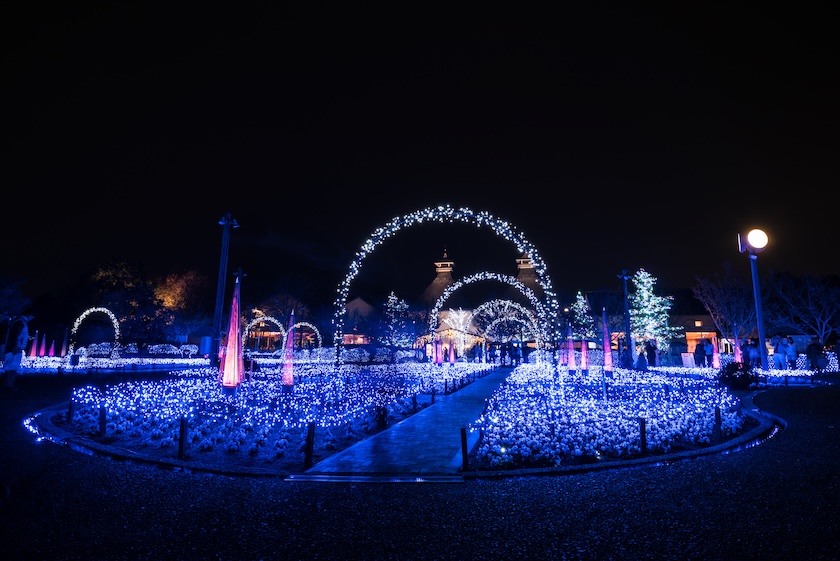
Ashikaga Flower Park is one of Japan’s most beloved nature-based illumination events. Instead of traditional Christmas colors, expect floral-inspired light displays, wisteria-style tunnels, soft purples, blues, pinks, and garden scenes designed around flowers and seasonal landscapes.
It takes more effort to reach than a city-center display, but that is part of the appeal. This is a destination illumination rather than something you stumble across after dinner.
Detail |
Info |
|---|---|
Usual Season |
Mid-October to mid-February |
Typical Hours |
Late afternoon to evening |
Location |
Ashikaga Flower Park, Tochigi Prefecture |
Admission |
Ticketed entry |
Nearest Station |
Ashikaga Flower Park Station |
Best For |
Garden illuminations, couples, families, nature-inspired light displays |
Seasonal Light-Ups and Illumination Events Throughout Japan
Winter is the main illumination season in Japan, but it is not the only time the country lights up beautifully. Different seasons bring different kinds of evening scenery, from cherry blossoms after dark to summer fireworks and autumn foliage light-ups.
These seasonal light-ups are especially useful if you are not travelling in December but still want that after-dark magic.
Spring
Japan may be famous for daytime cherry blossom viewing, but spring also brings beautiful night light-ups around temples, gardens, and parks. Kyoto’s Maruyama Park, Kiyomizu-dera, and several historic districts often feel completely different after sunset.
This kind of evening cherry blossom viewing is known as yozakura. It is softer and more atmospheric than daytime hanami, with lanterns, reflections, and pale pink blossoms glowing against the night sky.
Summer
Summer is not usually “illumination season,” but Japan’s fireworks festivals, known as hanabi taikai, more than make up for it. Fireworks light up the night sky from Tokyo Bay to Lake Biwa, and many events include food stalls, yukata, and riverside crowds. Tokyo’s Adachi Fireworks Festival is another classic seasonal highlight, lighting up the Arakawa River with one of the city’s most energetic fireworks displays. It is usually held before the peak summer fireworks season, so check the official schedule before planning your evening.
Think of it as Japan’s summer version of a light show: louder, warmer, and much more festival-like.
Autumn
Before winter arrives, autumn foliage light-ups take over temples and gardens. Places such as Eikando in Kyoto and Rikugien Garden in Tokyo become especially beautiful when red maple leaves are illuminated after dark.
The contrast of fiery leaves, golden reflections, and crisp evening air gives autumn light-ups a completely different mood from winter illuminations.
Winter
Here’s where Japan really starts to sparkle.
Winter illuminations are usually at their best from November through February. Some are Christmas-focused and end around December 25, while others are broader seasonal displays that continue well into the new year.
This is the best season for:
City-center light walks
Garden illuminations
Romantic date-night displays
Waterfront lights
Shopping district decorations
Large-scale ticketed illumination parks
Unique and Themed Illumination Events in Japan
For every grand light park, there is a smaller or more unusual illumination quietly stealing hearts. These themed displays are especially useful if you want something beyond the standard Christmas-style lights.
Because smaller events can change more often, treat these as types of experiences rather than guaranteed annual listings.
Projection Mapping and Digital Art
Projection mapping and digital light art are usually limited-time events in Japan, so they are best treated as bonus finds rather than guaranteed annual stops. In Tokyo, look for seasonal digital displays around areas such as Marunouchi, Tokyo Midtown in Roppongi, Shibuya, and Tokyo Station. In Osaka and Yokohama, waterfront districts and large commercial areas sometimes add projection mapping, interactive lights, or building-sized visuals during the winter event season.
Kyoto occasionally brings a more atmospheric version of this trend, with temples, gardens, or station-area events using light and sound to highlight traditional architecture. Because these displays change often, check local event listings close to your travel dates before building an itinerary around them.
Castle and Historic Light-Ups
Historic landmarks often become even more dramatic after dark. In Kyoto, temple and garden light-ups at places such as Kiyomizu-dera, Eikando, and Kodai-ji bring a soft glow to wooden halls, stone paths, ponds, and autumn leaves. In Tokyo, Rikugien Garden is a classic example of how evening lights can transform a traditional landscape garden, while castle settings such as Osaka Castle and Himeji Castle sometimes host seasonal light-up events that make their stone walls, moats, and towers feel even more cinematic.
Nature-Based Illuminations
Nature-themed events use floral colors and botanical designs rather than traditional holiday imagery. Expect pinks, purples, blues, wisteria-inspired lights, and garden paths that feel softer than the big city displays.
Ashikaga Flower Park and Nabana no Sato are two of the best-known examples.
How to Plan a Japan Christmas Lights Trip
Before you start mapping your Japan light festival circuit, a few simple choices will make the experience much easier. Illumination events are usually held at night, often outdoors, and sometimes far from the nearest major station, so planning matters more than it looks.
The good news? Many of Japan’s best illuminations fit naturally into a regular winter itinerary. You can visit one after dinner, build a whole evening around a ticketed garden event, or use them as a reason to explore a different city after dark.
Book Accommodation Early
Big events like Nabana no Sato, Tokyo Mega Illumination, and Yokohama Milight can attract national crowds, especially on weekends and around Christmas. If a light event is a major part of your itinerary, choose accommodation near a convenient train station.
JapanDen Accommodation can help you compare places to stay near your chosen city, whether you want a central Tokyo hotel, a Yokohama base, or somewhere closer to Nagoya and Mie.
Ride Smart With Rail Passes
Many illumination cities are connected by major JR lines, especially if you are travelling between Tokyo, Yokohama, Nagoya, Kyoto, and Osaka. A JR Pass or Regional Pass may be useful if your light-chasing trip is part of a wider multi-city itinerary.
For a simple Tokyo-only trip, individual train tickets or an IC card may be enough. For longer routes, check your rail options before you go.
Stay Connected
Trust us, you will want Google Maps for station transfers, weather checks, digital tickets, and the occasional “where exactly is this glowing tunnel?” moment.
A Pocket Wi-Fi, SIM card, or eSIM makes evening travel much less stressful, especially when you are moving between stations after dark.
Check Official Websites Before You Go
Illumination dates, opening hours, ticket prices, and closure days can change because of weather, maintenance, crowd control, or venue schedules. Always check the official website before heading out.
This is especially important for ticketed events and venues that do not operate every night.
Dress for Sparkle Weather
Japan’s winter nights can feel much colder than the daytime forecast suggests. If you are visiting Mie, Kyoto, Tochigi, or outdoor garden events, bring layers, a scarf, gloves, and comfortable shoes.
Heat packs from convenience stores are your best friend. Buy them. Love them. Thank us later.
Where to Eat and What to Do Near Japan’s Christmas Lights
Once you’ve seen the lights, you’ll probably want somewhere cozy to eat, drink, or warm up. The best illumination nights often combine a light display with dinner, shopping, hot springs, or a short walk nearby.
This is where Japan does winter beautifully: not just the lights, but the whole evening around them.
Yokohama
After Yokohama Milight, stop by the Red Brick Warehouse area, enjoy the Minato Mirai waterfront, or find a café with views of the bay. If seasonal markets are running, this area becomes especially lively.
Mie and Nagoya
If you’re visiting Nabana no Sato, consider pairing it with Nagashima Onsen or a longer stay around Nagoya. It is a little more effort than a city-center illumination, so make the evening feel like an event rather than a quick stop.
Tokyo
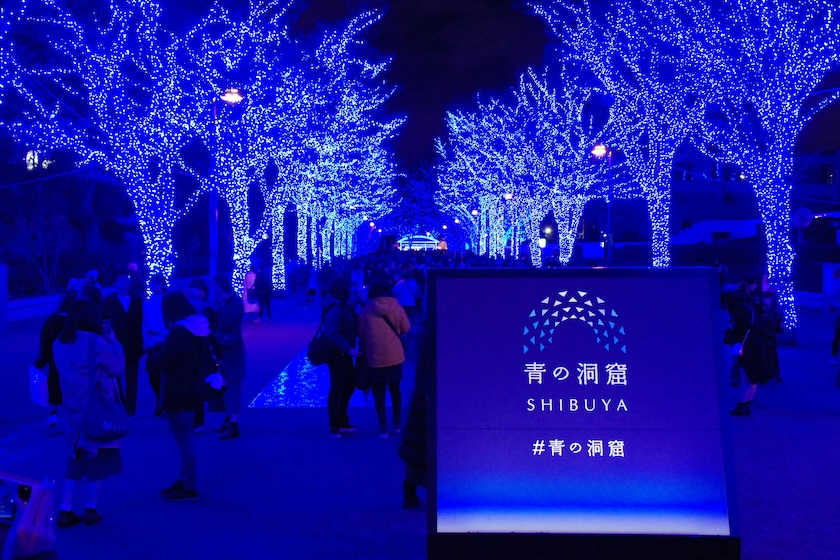
There are endless options to add to your Tokyo itinerary. After an illumination walk, extend the evening in Marunouchi, Roppongi, Ebisu, Shibuya, or Shinjuku. Ebisu Yokocho works well if you want lantern-lit alley energy after a polished winter light display.
Osaka
In Osaka, Dotonbori may be touristy, but the river reflections and neon match the theme perfectly. It is an easy place to end the night after Midosuji or Nakanoshima illuminations.
FAQs About Japan Christmas Lights
Q: When do Christmas lights and winter illuminations start in Japan?
A: Most winter illuminations in Japan begin between late October and early November. Many continue until January or February, while some major events run into spring.
Q: Are Christmas lights in Japan still up after December 25?
A: Yes. Many displays are winter illuminations rather than Christmas-only decorations, so they often continue after Christmas. Some Tokyo displays end on December 25, but many others run into January or February.
Q: Are there Christmas lights in Tokyo?
A: Yes. Tokyo is famous for winter illuminations in areas such as Marunouchi, Shibuya, Roppongi, Tokyo Midtown, Shinjuku, Omotesando, and Ebisu.
Q: Which city has the best Christmas lights in Japan?
A: Tokyo offers the greatest variety, Yokohama is excellent for waterfront atmosphere, Osaka is great for city lights and neon, and Nabana no Sato in Mie is one of the best choices for a full-scale illumination experience.
Q: Do I need tickets for Japan’s illumination events?
A: Some events are free, while others require paid entry. Yokohama Milight, Marunouchi Illumination, and many city-center displays are free, while Nabana no Sato, Ashikaga Flower Park, and Tokyo Mega Illumination are ticketed.
Q: What is the difference between Christmas lights and winter illuminations in Japan?
A: Christmas lights are usually tied to the holiday season, while winter illuminations are broader seasonal light displays. In Japan, many illuminations are romantic, artistic, or nature-themed rather than strictly Christmas-themed.
Q: Are Japan’s winter illuminations good for families?
A: Yes. Many events are family-friendly, especially garden illuminations, city-center light walks, and large venues with food, restrooms, and easy transport. Weekends can be crowded, so families may prefer early evening visits.
Q: Are Japan Christmas lights good for couples?
A: Absolutely. Winter illuminations are very popular for date nights in Japan. Yokohama, Marunouchi, Roppongi, Nabana no Sato, and Ashikaga Flower Park are especially atmospheric for couples.
Q: What should I wear to see winter illuminations in Japan?
A: Wear warm layers, comfortable shoes, and a coat suitable for outdoor walking. Gloves, scarves, and disposable heat packs are useful, especially for garden events or waterfront locations.
Q: Can I visit Japan’s winter illuminations after dinner?
A: Yes. Many illuminations run into the evening, making them perfect before or after dinner. This is one reason travellers often add illuminations to winter itineraries, as they are easy to enjoy after daytime sightseeing.