Tokyo's Flood Tunnels: How to Visit the G-Cans "Underground Temple"
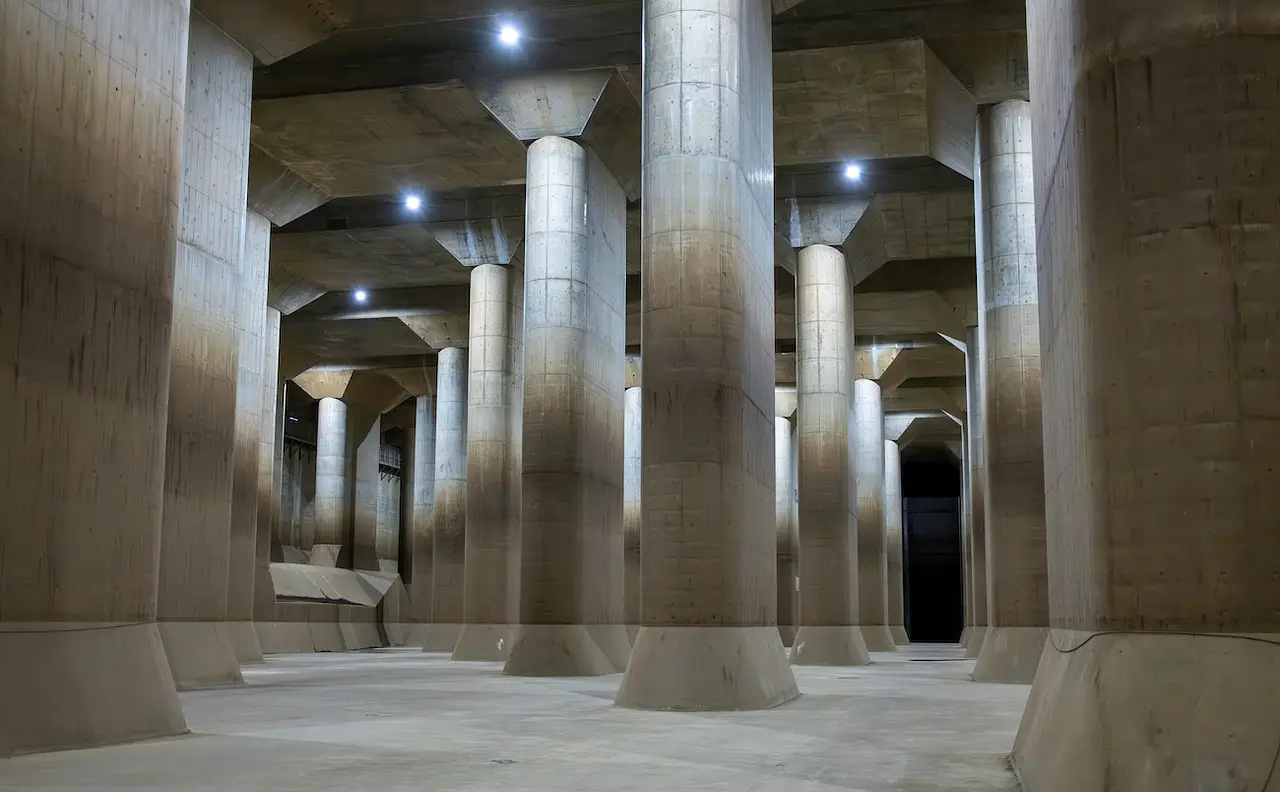
An engineering wonder worth the detour
Beneath the suburbs of Kasukabe, Saitama, 59 colossal concrete pillars rise out of darkness inside a chamber 177 meters long and 25 meters high. This is the G-Cans "Underground Temple," officially the Metropolitan Area Outer Underground Discharge Channel, one of the most striking day trips near Tokyo.
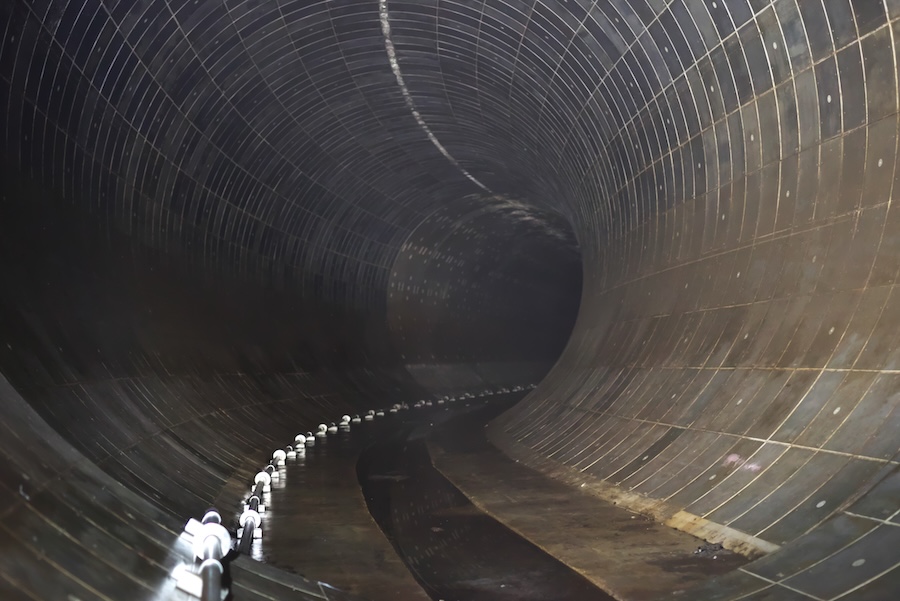
It's the world's largest underground flood diversion facility, using 6.4 kilometers of tunnels 50 meters below ground and pumps capable of moving 200 metric tons of water per second into the Edo River. When inactive, it opens for guided tours, drawing architecture lovers, photographers, and curious travelers alike.
Here's the essential information to check before you go any further.
Detail |
Info |
Topic type |
Off-beat engineering and architecture experience |
Best moment to plan this |
Before your trip; reservations fill weeks in advance |
Ideal for |
Architecture lovers, photographers, curious travelers, older children |
Risk if you skip planning |
Walk-ins are never accepted; no reservation means no entry |
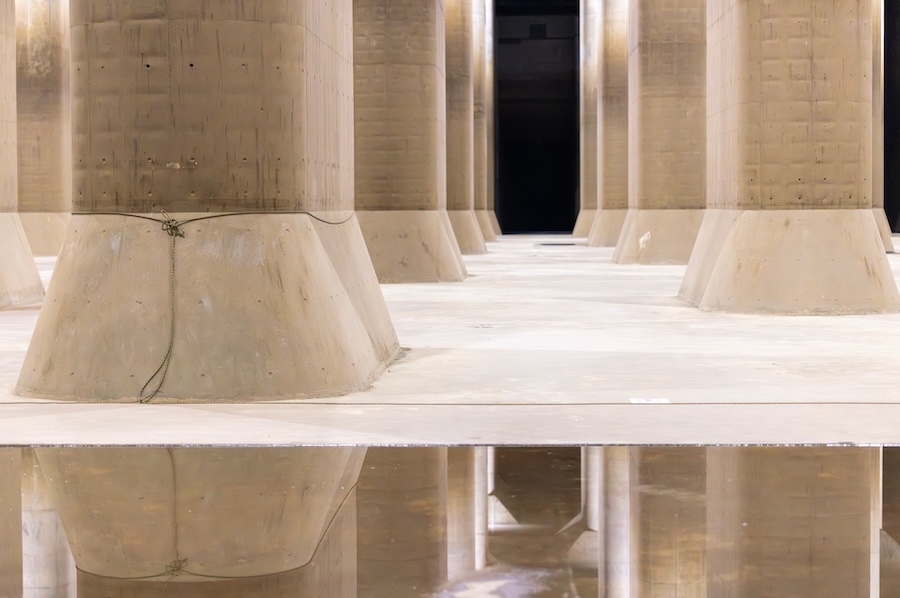
G-Cans is a functioning flood-control system that doubles as one of Japan's most photogenic industrial spaces. The surge tank — a cathedral-like chamber (pictured above) supported by 59 concrete columns, each 18 meters tall — was built to prevent flooding, not for tourism, so tours only run when the system is inactive.
A visit here follows a fairly fixed sequence, so it helps to know what's coming at each stage.
Booking ahead: Popular slots fill weeks out on the official reservation page.
Arrival: Tours start at the Ryu-Q Kan visitor center before descending.
The descent: Over 100 stairs, no elevator, not barrier-free.
At the bottom: Roughly 15–20 minutes of free time for photos.
Weather risk: Heavy rain can trigger the system and cancel tours at short notice.
This trip suits some travelers far more naturally than others.
Especially helpful for: Architecture and engineering fans, photographers, and anyone wanting something beyond temples and shopping.
Consider carefully if: You have mobility issues or young children. 116 steps are required, and kids below elementary age aren't permitted.
Nice to know if: You're already planning other Kanto day trips.
Timing has a bigger impact on this visit than on most Tokyo attractions.
G-Cans sits well outside Tokyo's usual sightseeing radius. Central Tokyo offers reliable English support, but that drops off once you transfer onto the Tobu Noda Line toward Kasukabe. Buses run infrequently near the site, so a taxi from the station is the practical choice. Unlike Shibuya or Asakusa, this spot sees a steady trickle of visitors rather than crowds, so reservations matter more than arriving early.
December through May offers the most reliable availability, while rainy and typhoon seasons raise cancellation risk. It suits a half-day add-on better than a full-day destination.
A little advance planning separates a smooth visit from a wasted trip out to Saitama.
Book online on the official G-Cans site; cancellations are free up to three days out.
Choose your course: the standard Underground Temple Course (¥1,200) suits most; the Shaft Course (¥3,500) and Impeller Exploration Course (¥5,500) go deeper.
Take the JR Shonan-Shinjuku Line to Omiya, then the Tobu Noda Line to Minami-Sakurai. Neither the JR Pass nor a Regional Pass covers the Tobu leg; a taxi from the station takes under 10 minutes.
Closed-toe shoes with grip
A light layer
Water
Snacks (no food on-site)
These small habits make the difference between a smooth tour and an avoidable hiccup.
Book early.
Arrive 10 minutes ahead.
Bring your own water.
Don'ts:
Don't photograph on the stairs.
Don't book deeper courses if uneasy with heights.
Don't assume you need a translator.
Weather cancellations can usually be rescheduled through the same reservation site.
G-Cans slots into a Japan itinerary a little differently depending on who's traveling.
A couple might pair it with a stop at Omiya's Railway Museum for a full Saitama day.
A family could base at a hotel in central Tokyo and rely on Pocket Wi-Fi for the transfer.
A solo traveler could fold it into a wider loop of other Kanto day trips from Tokyo.
Arriving from overseas beforehand? A Meet & Greet service smooths that first day.
Q: Can tourists visit the G-Cans underground temple?
A: Yes, guided tours run when the system is inactive, but advance booking is required.
Q: How much does the G-Cans tour cost?
A: The standard course costs ¥1,200 per person; deeper specialist tours run ¥3,500 to ¥5,500.
Q: Do I need to speak Japanese to visit?
A: No, an English leaflet is provided, and the translator requirement has been relaxed.
Q: Is the tour suitable for children?
A: Only for elementary-age and older, since descending over 100 stairs independently is required.
Q: Can tours be cancelled on the day?
A: Yes, heavy rain can activate the flood system and cancel tours with little notice.
Q: How do I get to G-Cans from Tokyo?
A: Take the JR line to Omiya, then the Tobu Noda Line, then a short taxi ride.
Q: Is the JR Pass valid for this trip?
A: Partially. It covers the JR leg to Omiya, but not the Tobu Noda Line onward.
Q: What should I wear for the tour?
A: Closed-toe shoes with good grip, plus a light layer for the cooler underground temperature.
Q: When is the best time to visit G-Cans?
A: December through May offers the most reliable tour availability with fewer weather-related cancellations.
Q: Is G-Cans worth visiting on a short Tokyo trip?
A: Yes, for engineering or architecture fans, though it suits longer trips better than tight schedules.
Why should I book with JapanDen?
How do I book a hotel or ryokan through JapanDen?
What types of accommodations do you offer in Japan?
How can JapanDen help with planning my trip?
As well as booking accommodation, JapanDen is a place to learn more about Japan and how you can make the most of your time in this special country. From in-depth region guides to stories from Japan, we’ll be regularly publishing carefully curated insights from Japanese culture, with recommendations for the best activities and attractions and the latest news. Looking forward, we’ll also be adding special community features so you can share ideas and inspiration with like-minded people. Please come back and visit us regularly as we continue to add new content. We want JapanDen to be your home away from home too.
Do you offer guided tours in Japan, and how can I book one?
As part of the JRPass.com group, we offer a dedicated Meet and Greet service with expert personal assistance on your arrival in Japan booked via JRPass.com, alongside nationwide and regional rail passes for travel. As JapanDen grows, we will be offering more services and activities to provide a complete Japan travel experience.
Can I purchase Japan Rail Passes through your website?
JapanDen is part of the JRPass.com group, book your passes and tickets directly on JRPass.com