Hirosaki in Spring: Sakura, Shrines, and one of Japan’s Best-Kept Secrets

The north blooms later, and that’s exactly the point.
Here's the thing about Japan's cherry blossom season: everyone knows about it, which means everyone goes at the same time, to the same places.
Kyoto's parks fill up weeks before peak bloom. Shinjuku Gyoen sells out its timed entry slots before you've finished your morning coffee. And the photos you spent months planning? Someone else's shoulder is in every single one of them. There is a better way. Our team in Japan tracked it and made that trip: heading north to Aomori Prefecture, arriving in Hirosaki in late April, and experiencing the sakura season the way it was before it became a logistical event.
Type |
Destination Guide / Spring Experience |
Location |
Hirosaki, Aomori Prefecture, Tohoku, Japan |
Best Time to Visit |
Late April – early May (sakura season) |
Main Highlights |
Hirosaki Sakura Matsuri, Hirosaki Castle, Iwakiyama Shrine, Mount Iwaki |
Nearest Station |
Hirosaki Station (from Shin-Aomori via JR Ou Main Line, ~35–45 min) |
Getting There |
Tokyo → Shin-Aomori: Hayabusa Shinkansen (~3h 20min). Covered by JR Pass. |
Admission |
Hirosaki Park: ¥320 (inner park during sakura season). Shrine: Free. |
Best For |
Sakura chasers, culture lovers, photographers, off-the-beaten-path travelers |
Official Links |
Four things make this trip. We’ll take them in the order you’ll likely encounter them.
The first thing you notice is the density. The sakura here are different from anywhere else in Japan and there’s an actual reason for that. Aomori is Japan’s apple capital, and for generations, orchards here have been pruned with a technique that maximises flower output per branch. The same method is applied to the cherry trees in Hirosaki Park. The result: four to seven blossoms per bud, compared to the usual three or four you’d find in Tokyo or Kyoto.
The Hirosaki Sakura Matsuri runs from late April through early May, which is another tactical advantage, the north blooms later, so if you’ve already caught sakura in Tokyo, you can chase the season north. One of Japan’s most quietly clever travel moves.
If Hirosaki Park is the headline act, the Iwaki-san Cherry Blossom Row is the secret encore that most visitors never find out about. At the southern foot of Mount Iwaki, a 20-kilometre road is lined with approximately 6,500 Oyamazakura, North Japanese hill cherry trees, making it the longest cherry-blossom-lined road in the world. Not in Japan, in the world. The Oyamazakura blooms in a deeper, bolder pink than the pale Somei Yoshino you’ll see everywhere else.
The road runs at an altitude between 200 and 450 metres, which means flowering happens slightly later here than in Hirosaki city, typically peaking in early May. That altitude difference also means you can experience both spots on the same trip without the blooms overlapping, if you time it right. Start at Hirosaki Park in late April, then follow the mountain road a few days later.
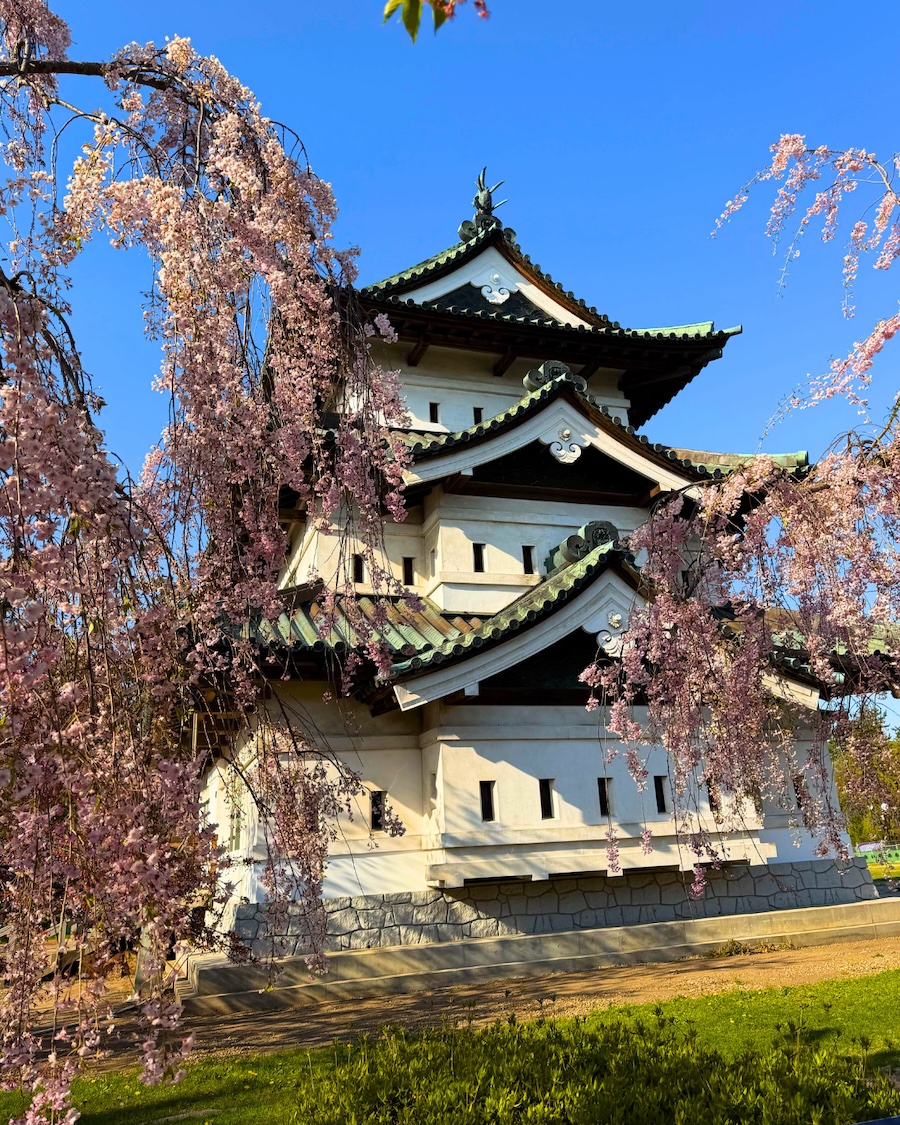
There are only 12 original castle keeps left in Japan. Most of what you’ll visit elsewhere is a concrete reconstruction. Hirosaki Castle is the real thing though it’s worth knowing that the current three-storey keep dates to 1810, after the original 1611 structure was destroyed by lightning in 1627. What makes it special is that it was rebuilt entirely in timber and has stood untouched since, making it one of only 12 genuine Edo-period keeps in the country. Standing in front of it, with Mount Iwaki framed perfectly behind it on a clear day, and pink petals floating on the moat below, it hits differently than any poured-concrete replica ever could.
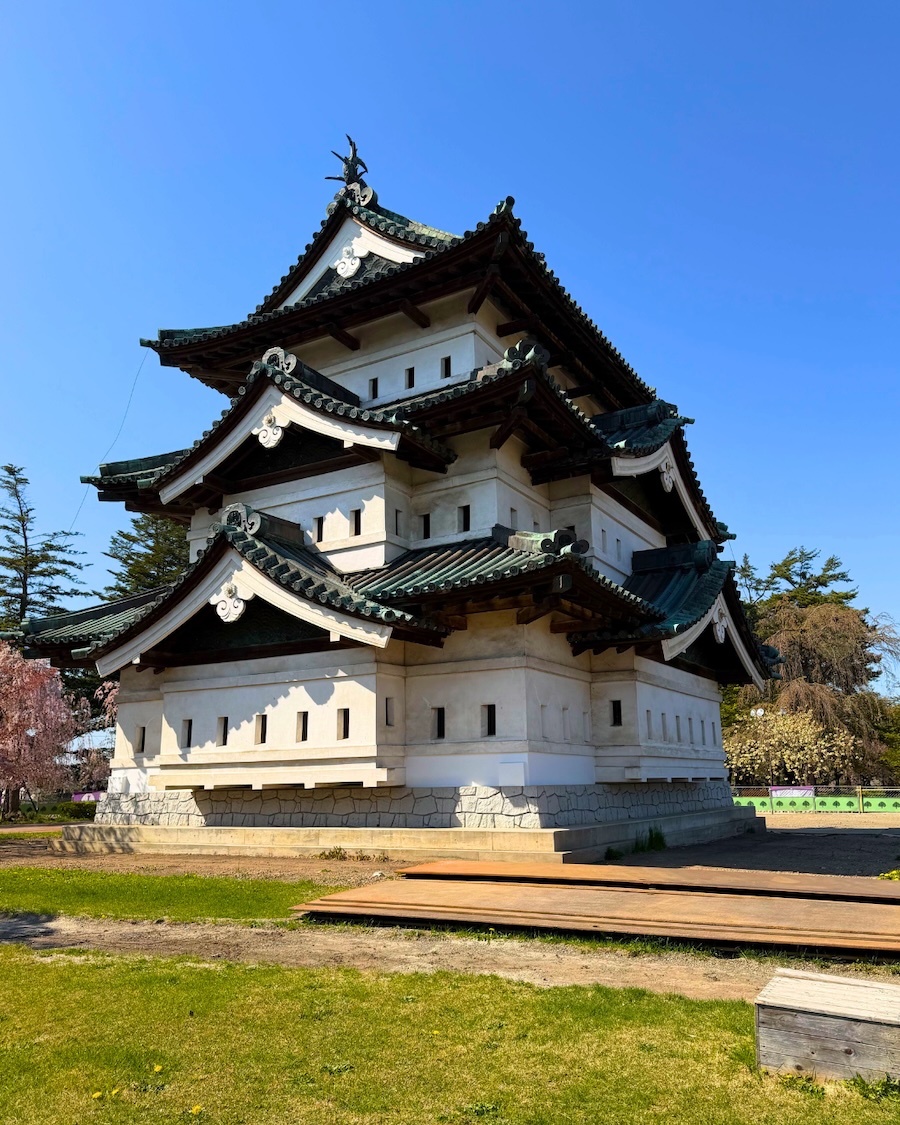
We stood at the outer moat for a long time. Long enough that a couple of locals stopped and smiled at us, which in Japan means something. The hanaikada, a raft of fallen petals drifting on the water, is one of those things that sounds like a travel cliché until you see it, and then you completely understand why people keep writing about it.
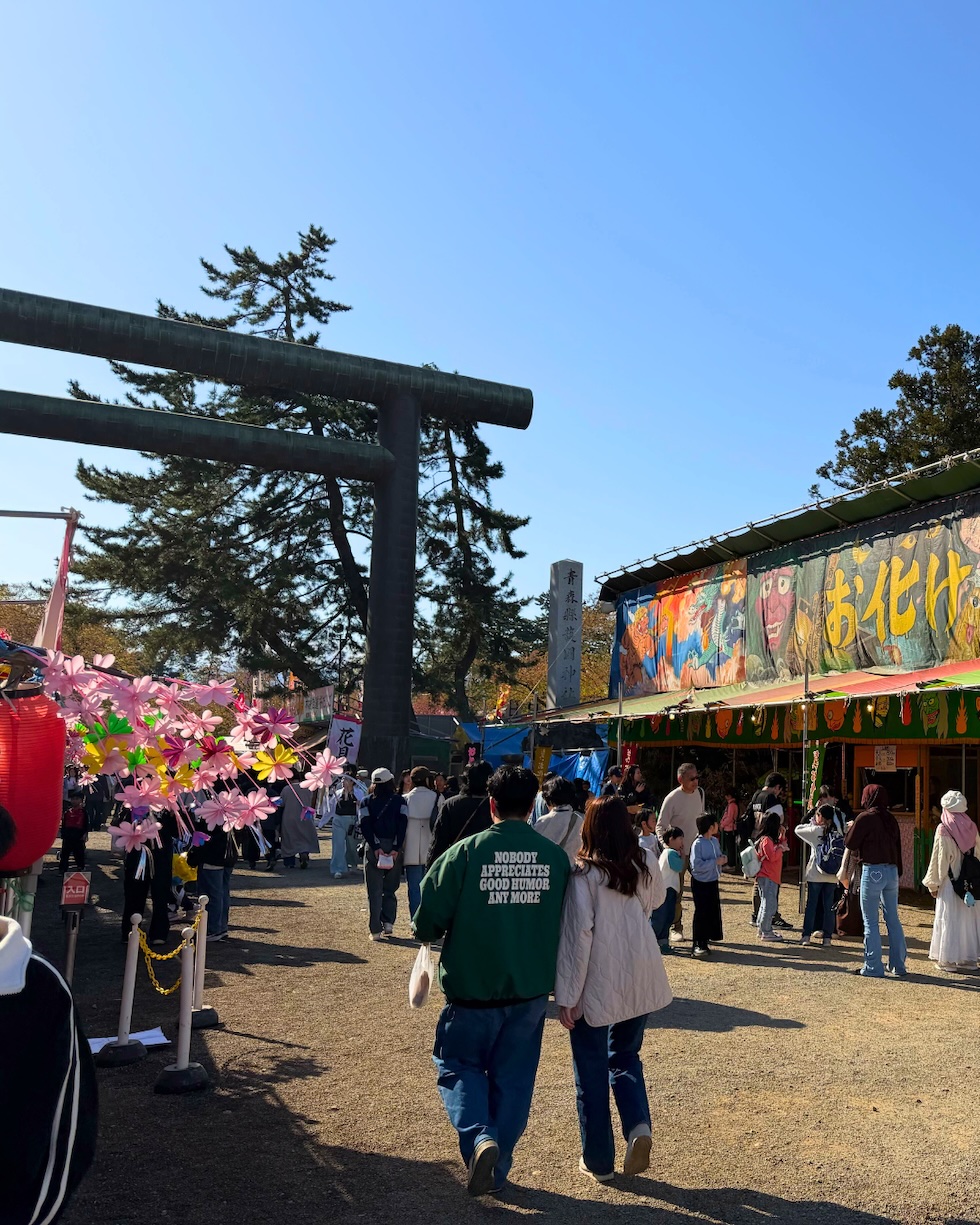
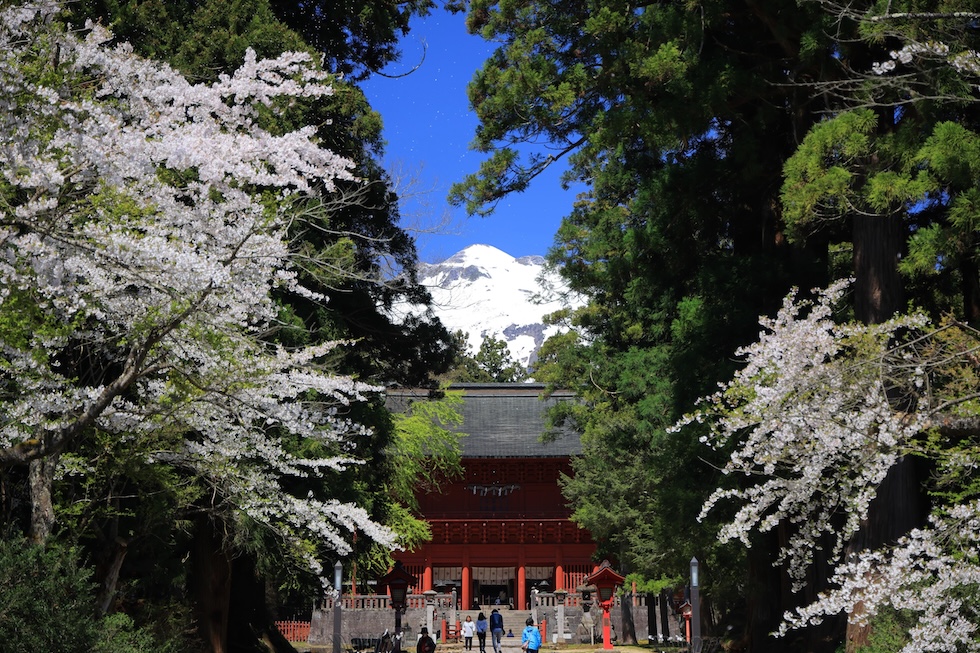
Founded in 780 AD, Iwakiyama Shrine sits at the foot of Mount Iwaki, and the entire mountain is considered part of its sacred grounds.
The shrine’s ornate vermilion halls have earned it the nickname “Oku-Nikko” , a reference to the famous Nikko Tosho-gu, which is about the highest compliment one Shinto shrine can pay another. We weren’t expecting it to be that beautiful.
Look for the upside-down lion-dog statues climbing the fence: local legend says one brings luck with money, the other with relationships.
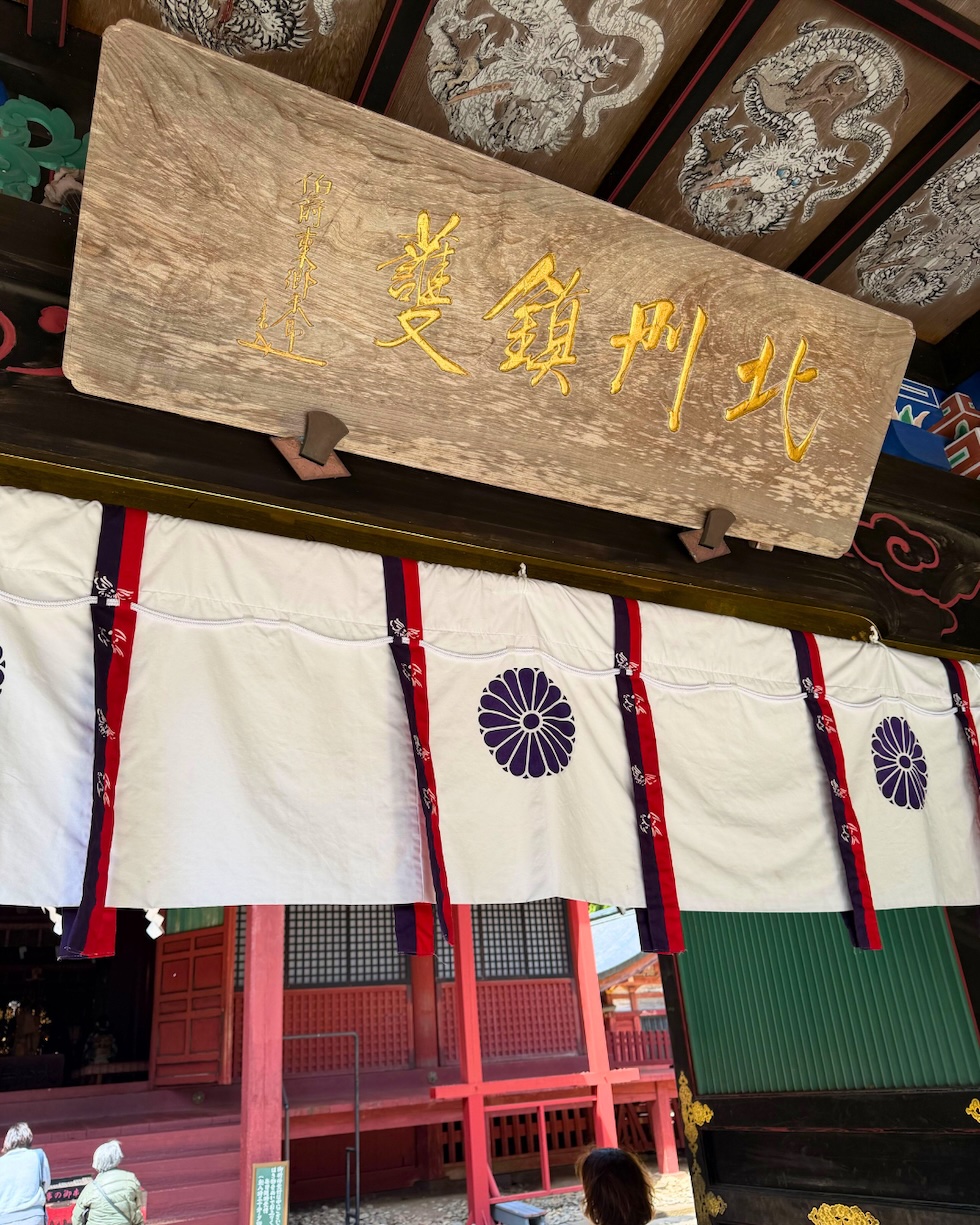
At 1,625 meters, Mount Iwaki rises almost perfectly alone from the Tsugaru plain, symmetrical, snow-capped through spring, impossible to ignore. Locals call it “Tsugaru’s Fuji,” and once you see it, you understand that this isn’t flattery. It genuinely looks like the kind of mountain someone would paint in a dream.
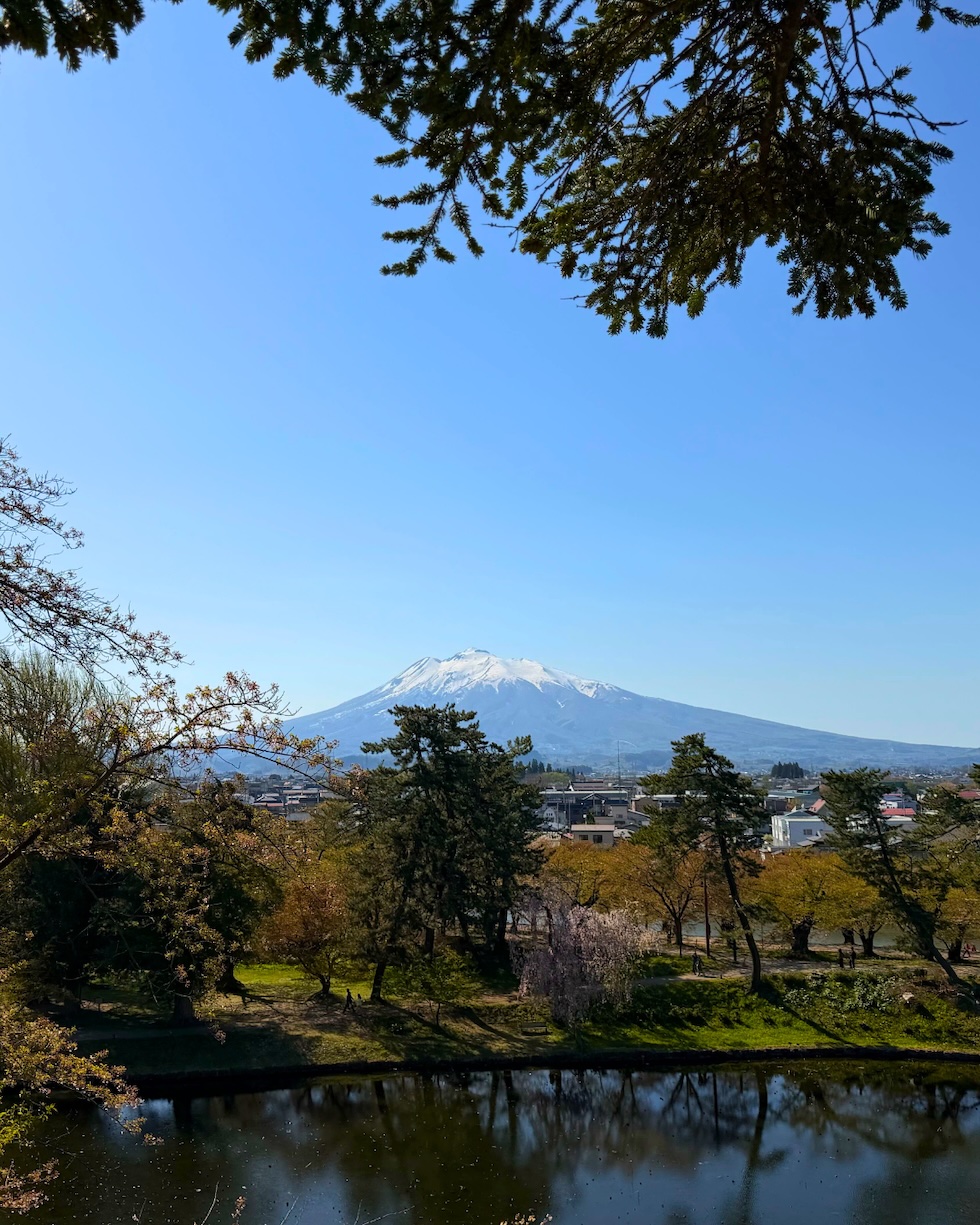
The mountain was sacred to the Emishi tribes long before Japan had a written history. Every August, worshippers still climb to the summit at 2:30 in the morning to greet the sunrise in prayer. In spring, with snow still on the peak and a full bloom of sakura at the base, the view from the shrine grounds looks like it was composed, as if someone had turned the saturation up.
Anyone who has ever felt faintly exhausted by the sakura crowds in Tokyo or Kyoto — and wondered if there was another way. There is and this is it.
First-time Japan travelers who want to see something most visitors miss entirely.
Sakura chasers who want to extend the season or experience the country’s most dramatically dense cherry blossoms.
Culture and history lovers who appreciate that Hirosaki Castle and Iwakiyama Shrine are the genuine article, not reconstructions.
Photographers and content creators — Aomori in late April is almost unfairly photogenic.
Travelers who enjoy the quiet. Tohoku moves at a different pace than the main tourist trail. That’s entirely the point.
Arrive at Hirosaki Park early — by 8am if you can manage it. The light is better and the crowds haven’t arrived yet.
From the park, check whether Mount Iwaki is visible before heading to the outer moat. Clear mornings are best for the castle-plus-mountain shot; it’s entirely worth waiting for.
Bring cash. Hirosaki’s street stalls and smaller vendors are often cash-only.
Visit Iwakiyama Shrine in the afternoon, when day-trippers have left and the cedar approach is at its most atmospheric.
The Dotemachi Loop Bus (around the park area) costs ¥150 per ride or ¥500 for a day pass — easy and worth it.
The entire journey from Tokyo is covered by the Japan Rail Pass — which makes this route particularly satisfying to pull off.
Step 1 |
Tokyo Station → Shin-Aomori Station | Hayabusa Shinkansen (E5 series, the green one) | Tohoku Shinkansen line | ~3h 20min at 320 km/h | Seat reservation required |
Step 2 |
Shin-Aomori → Hirosaki Station | JR Ou Main Line (local) | ~35–45 min | Covered by JR Pass |
Step 3 |
Hirosaki Station → Hirosaki Park | Dotemachi Loop Bus | ~15 min | ¥150/ride or ¥500 day pass |
Step 4 |
Hirosaki Station → Iwakiyama Shrine | Konan Bus (Hyakuzawa route) | ~40 min |
Total time |
Tokyo → Hirosaki: approximately 4.5 hours. Reserve Hayabusa seats in advance. |
If you are planning a wider Tohoku or multi-city Japan trip, it is worth comparing the national JR Pass against the JR East Tohoku Area Pass, which covers the same Shinkansen route and regional trains at a lower price if your journey stays within the Tohoku and Kanto regions.
Most people planning a Japan trip don’t make it to Aomori. We understand why — the south is easier to plan, more talked-about, and closer to the template of “classic Japan.” But Tohoku has something the main tourist trail has gradually lost: the feeling that you’ve actually discovered something.
The petals on the moat. The cedar path up to the shrine. The mountain standing alone on the plain like it’s been waiting for you. It’s all still there, still unhurried, still genuinely worth the train ride north.
Get the JR Pass, book the Hayabusa, and go before everyone else figures this out.
Late April to early May. Because Aomori is further north, it blooms 1–2 weeks after Tokyo — which means you can chase the sakura season northward and experience peak bloom twice in the same trip.
Yes, without hesitation. The combination of the 2,600 apple-pruned cherry trees, the original castle keep, and the moat view with Mount Iwaki in the background makes it one of Japan’s most distinctive sakura experiences. The crowds are real but manageable — especially compared to central Tokyo or Kyoto.
Absolutely. It’s about 40 minutes by bus and the contrast between the shrine atmosphere and the festival energy at the park makes for a genuinely well-rounded day. Don’t skip it just because it takes a little more logistical effort.
Yes — the entire rail journey from Tokyo to Hirosaki is covered by the Japan Rail Pass, including the Hayabusa Shinkansen to Shin-Aomori and the JR Ou Main Line to Hirosaki. You’ll need to make a seat reservation for the Shinkansen, which you can do at any JR ticket office.
Two days is a solid minimum if you want to visit Hirosaki Park, the castle, Iwakiyama Shrine, and Mount Iwaki without rushing. Three days gives you more breathing room and the chance to explore Hirosaki city itself, which has a genuinely good food scene and a relaxed local atmosphere that’s easy to disappear into.
Why should I book with JapanDen?
How do I book a hotel or ryokan through JapanDen?
What types of accommodations do you offer in Japan?
How can JapanDen help with planning my trip?
As well as booking accommodation, JapanDen is a place to learn more about Japan and how you can make the most of your time in this special country. From in-depth region guides to stories from Japan, we’ll be regularly publishing carefully curated insights from Japanese culture, with recommendations for the best activities and attractions and the latest news. Looking forward, we’ll also be adding special community features so you can share ideas and inspiration with like-minded people. Please come back and visit us regularly as we continue to add new content. We want JapanDen to be your home away from home too.
Do you offer guided tours in Japan, and how can I book one?
As part of the JRPass.com group, we offer a dedicated Meet and Greet service with expert personal assistance on your arrival in Japan booked via JRPass.com, alongside nationwide and regional rail passes for travel. As JapanDen grows, we will be offering more services and activities to provide a complete Japan travel experience.
Can I purchase Japan Rail Passes through your website?
JapanDen is part of the JRPass.com group, book your passes and tickets directly on JRPass.com